
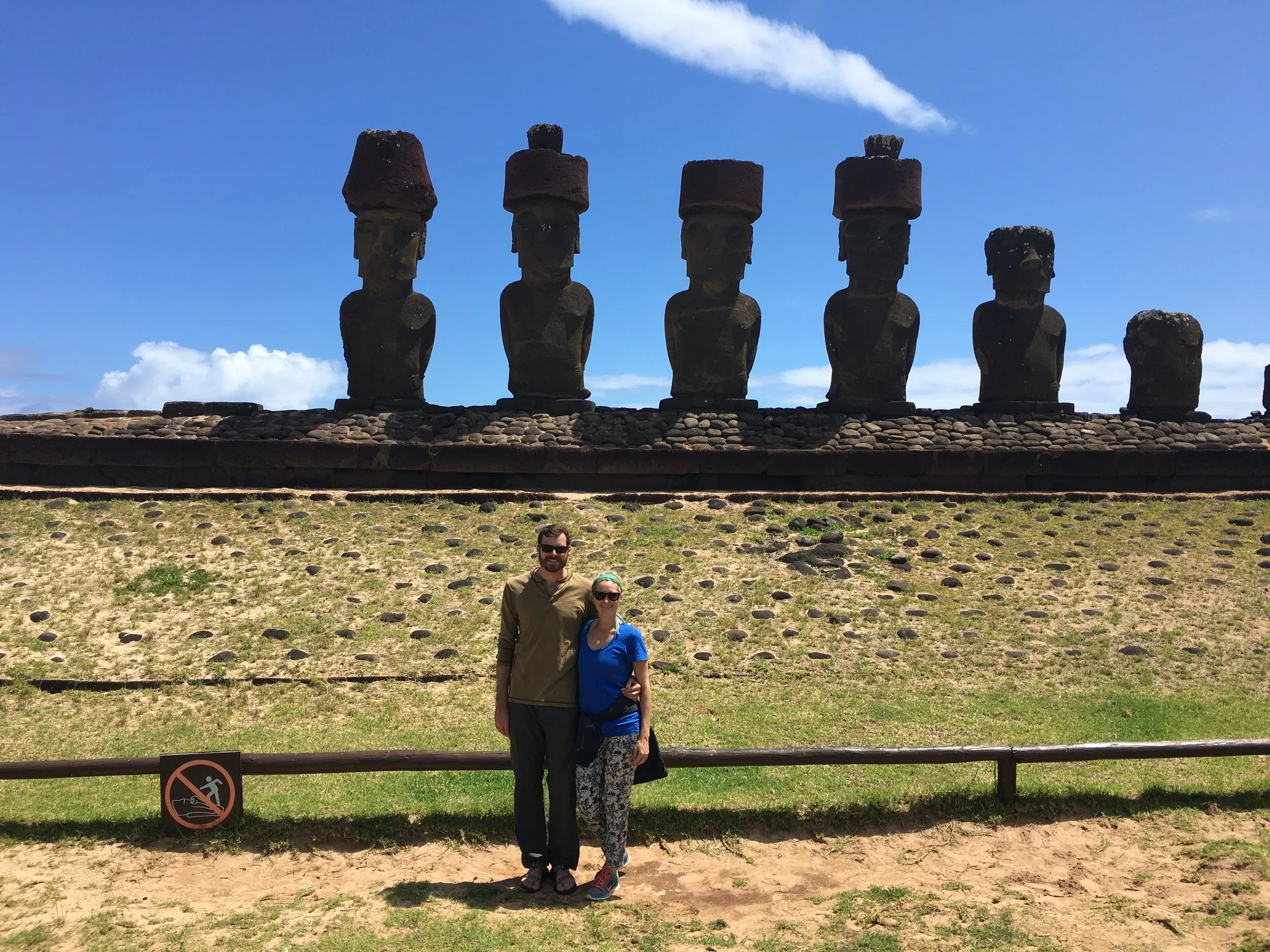
CHILE
👥 Family ✦ Bucket List ◎ Cultural ▲ Adventure
Chile brought us to one of the most unique places we've ever traveled. After a quick stop in bustling Santiago, we continued on to Easter Island, where seeing the famous moai up close was even more incredible than we'd imagined. Surrounded by rolling green landscapes and deep blue water, the island feels wonderfully remote and unlike anywhere else we've been. It's a place we'd seen in pictures for years, but experiencing it in person was something entirely different.
Destination GuideVISITED
October 2016
LENGTH OF STAY
5 days
TRAVEL STYLE
Couple’s Trip
Our Experience
Easter Island had always been one of those bucket-list places for me. But actually planning a trip there felt a little daunting. You're talking about traveling to one of the most remote inhabited islands in the world - where do you even start?
When Adam and I decided to visit South America just two years after we started dating, though, Easter Island was non-negotiable. We figured out the flights, added a quick overnight in Santiago, and went for it. Looking back, I'm so glad we didn't let the perceived difficulty of getting there talk us out of it.
Our time in Santiago was brief, but I actually really enjoyed the little bit we saw. We spent most of our day walking around the central area, stopping at cafés, people watching and listening to street musicians. It was just enough to get a small taste of the city before flying much farther west the following morning.
And then suddenly, we were on Easter Island.
the full story…One of the first things that struck me was how quickly the moai just...appear. We'd barely started walking around before there they were. These statues I'd seen in history books and photographs my entire life were suddenly right in front of us - and then there was another one, and another one. We stopped every few feet to take pictures until we eventually realized we weren't going to get very far if we kept this up.
That initial feeling never completely wore off. You know you're traveling to Easter Island to see the moai, obviously. But knowing what they look like and actually walking among them are two very different things.
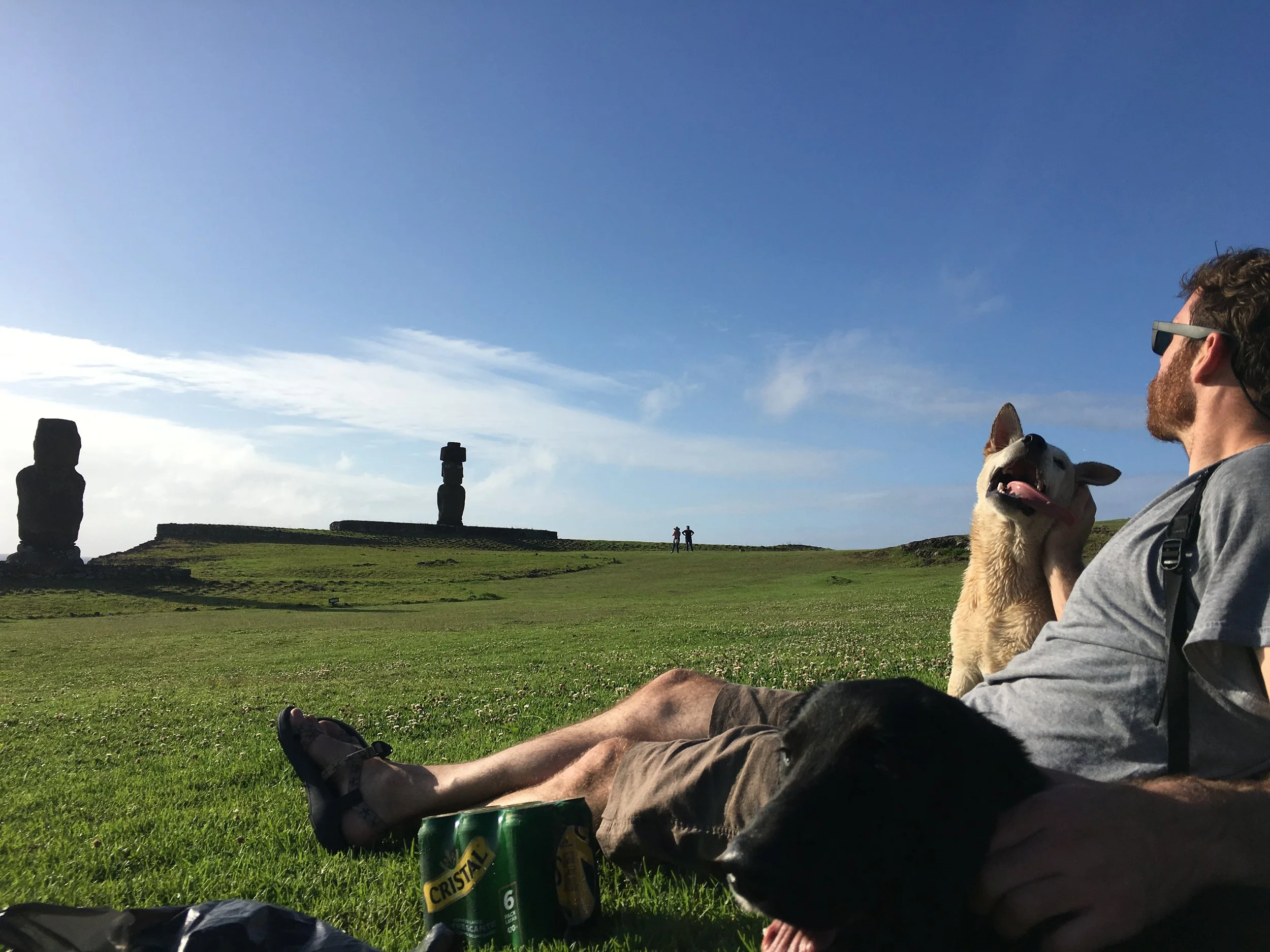
Making friends on Easter IslandWe'd booked a private tour for our first full day, which ended up being one of the best decisions we made. Easter Island isn't particularly large, but there's a tremendous amount of history packed into it, and having someone explain what we were looking at made a huge difference.
Our day started before sunrise at Ahu Tongariki. It was early, quiet and incredibly peaceful. We stood there with the 15 moai silhouetted in front of us as the sky slowly changed behind them. I remember mostly just watching in silence and thinking about the amount of history sitting right there in front of us. These statues had been standing on this remote island in one form or another for centuries, long before we ever knew they existed - and here we were watching another day begin behind them.
It's hard to make that sound as incredible as it felt without getting a little corny. But it really was one of those moments where nobody needed to say much.
Another memory that has strangely stuck with me? The dogs. There were dogs roaming around seemingly everywhere, and we'd stop and play with them as we walked. Something about sitting on this tiny island in the middle of the Pacific, surrounded by ancient history while a happy dog wandered over looking for attention, felt wonderfully normal in a place that otherwise felt anything but.
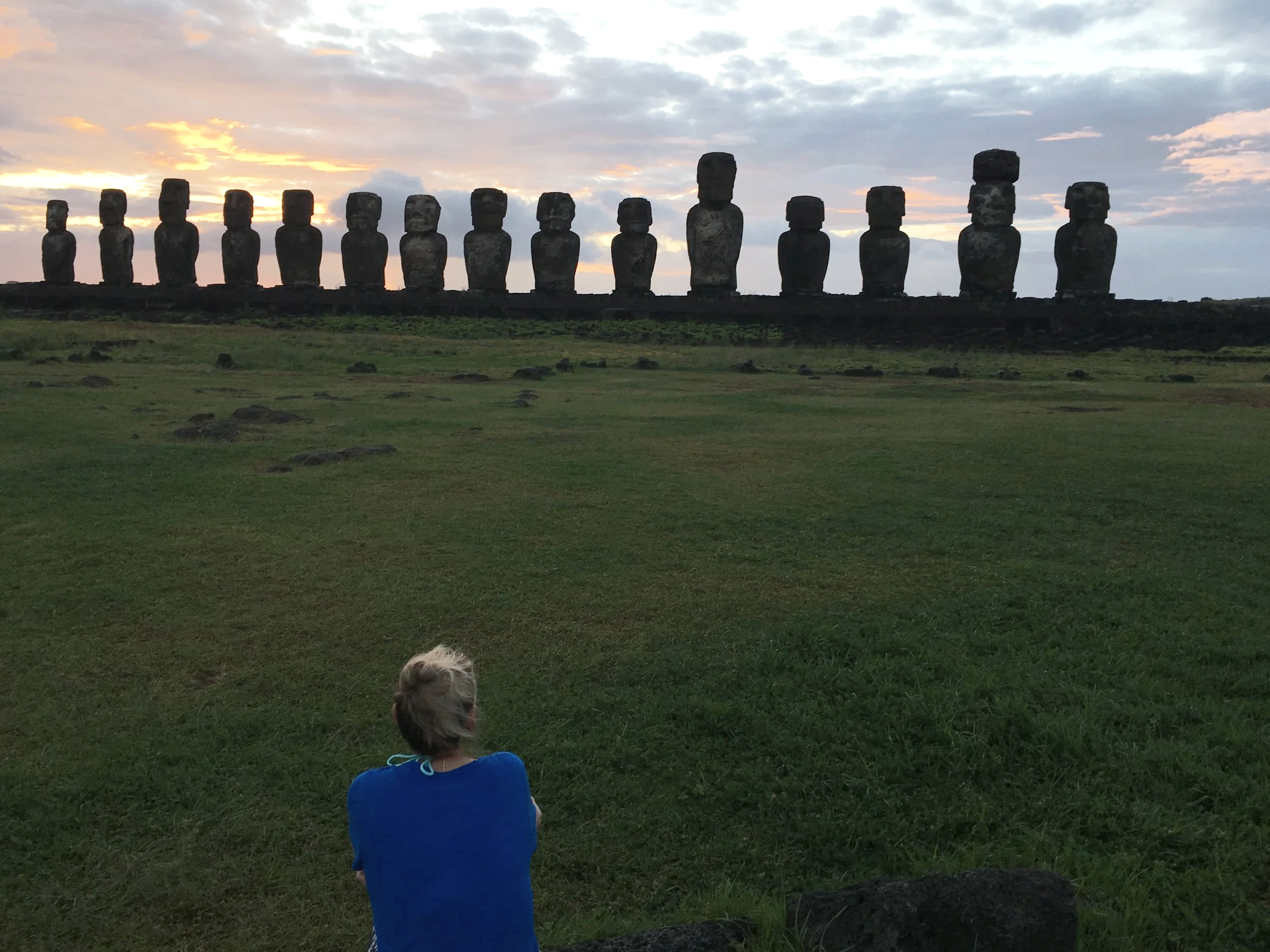
Sunrise at Ahu TongarikiRano Raraku gave us a completely different look at the moai. This is the quarry where most of them were carved, and it's probably home to some of the images most people picture when they think of Easter Island - the famous “heads” scattered across grassy slopes.
Except once you're there, you realize there's much more to it than that.
Moai are everywhere at Rano Raraku, in different sizes and stages of completion. Some appear to be heads because so much of their bodies remain buried beneath the ground. Others were never finished at all, including statues that are still part of the rock from which they were being carved.
That was the part that really got me thinking. You're looking at work that someone started hundreds of years ago and simply never finished. Who was carving it? Why did they stop? What was happening on the island at the time? We know much more about Rapa Nui history today than the old “mysterious civilization that disappeared” stories would have you believe, but standing there still leaves you with an incredible number of questions.
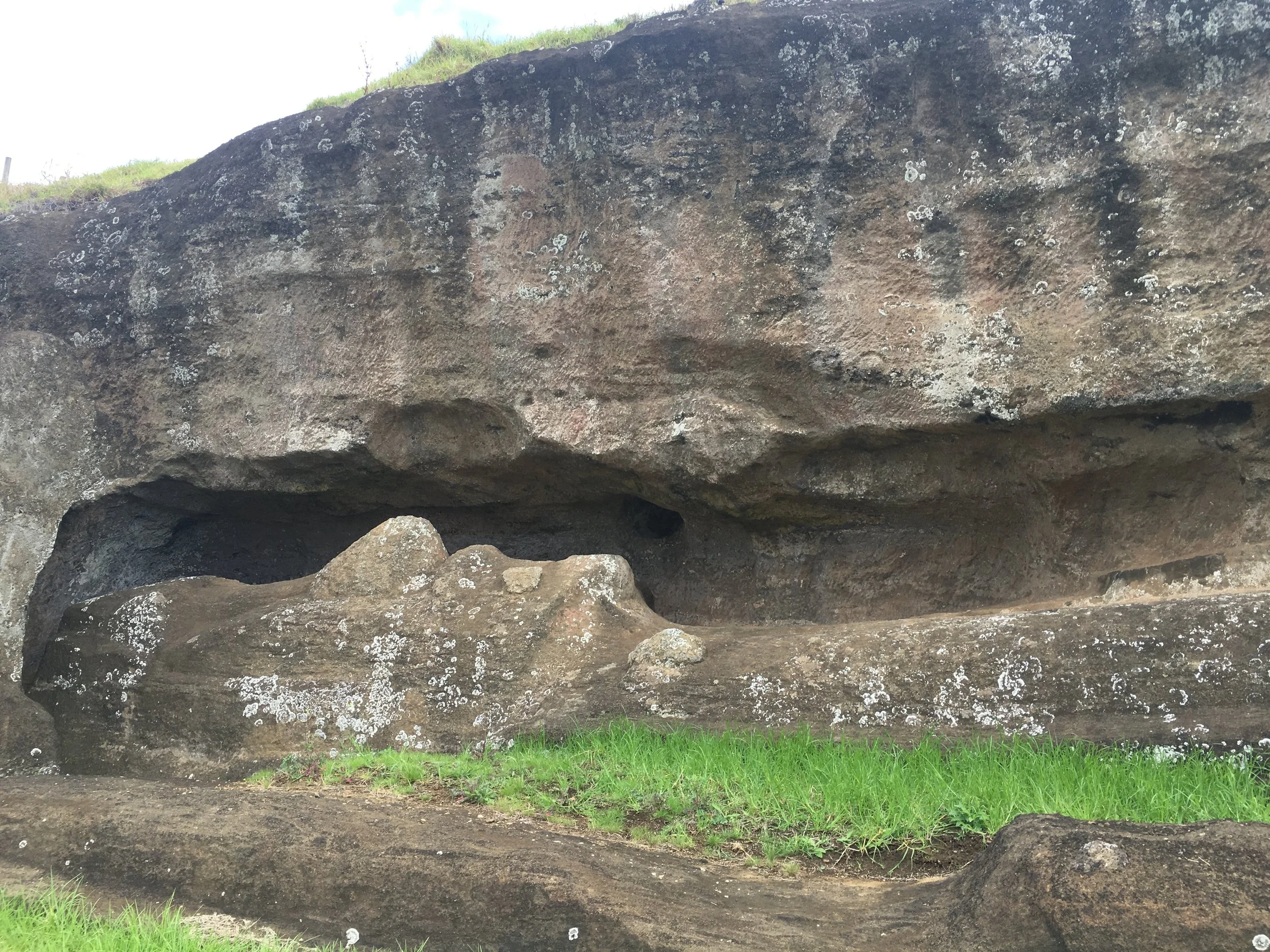
An unfinished moai at Rano RarakuIt's also the place where I most wished I'd done more research before we arrived. Our guide gave us so much valuable information, but I hadn't fully appreciated beforehand how much there was to learn - how the moai changed over time, how they were carved and transported, what they represented, and how they fit into Rapa Nui culture.
If I could do one thing differently, I'd spend some time learning about Rapa Nui before the trip. Nothing academic - even a documentary or a few podcasts would have helped me arrive with a better foundation. I think I would have appreciated what we were seeing even more.
And not every memorable part of Easter Island involved standing in front of a moai.
Anakena Beach is beautiful all on its own - soft sand, turquoise water and the kind of scenery you'd happily seek out even without several enormous statues nearby. We liked it enough during our tour that we went back on our own the next day with towels and some local beer.
That second visit is probably what I remember most. There was nowhere else we needed to be. We just sat on the beach, looked out at the Pacific and enjoyed the fact that we were basically unreachable from the rest of the world. You know intellectually that Easter Island is a tiny dot surrounded by thousands of miles of ocean. Sitting on the beach and staring out at all that water makes you actually feel it.
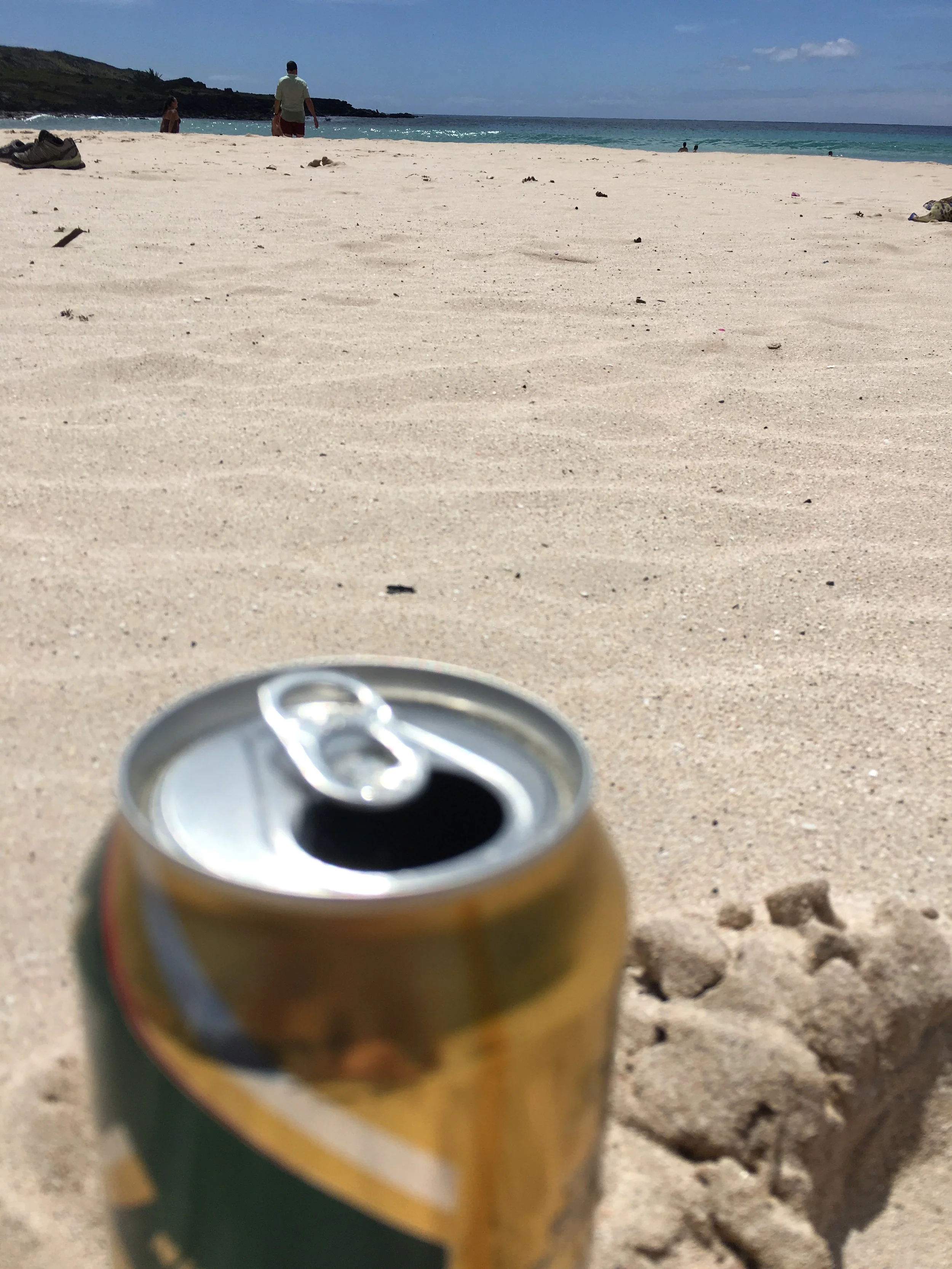
Local beer at Anakena BeachI had a similar feeling at Rano Kau, although the scenery couldn't have been more different.
Rano Kau is an enormous extinct volcanic crater, with water and vegetation covering much of the crater floor. It was completely different from so much of what we'd been seeing around the island - including, for once, no moai!
But what I remember most is standing high above the island and looking out at this beautiful blue water surrounding us. You know Easter Island is incredibly remote before you get there, but this was one of those moments when you could actually feel it. There was this tiny piece of land in the distance and then seemingly nothing but ocean beyond it. It was beautiful, a little surreal, and a view that has really stuck with me.
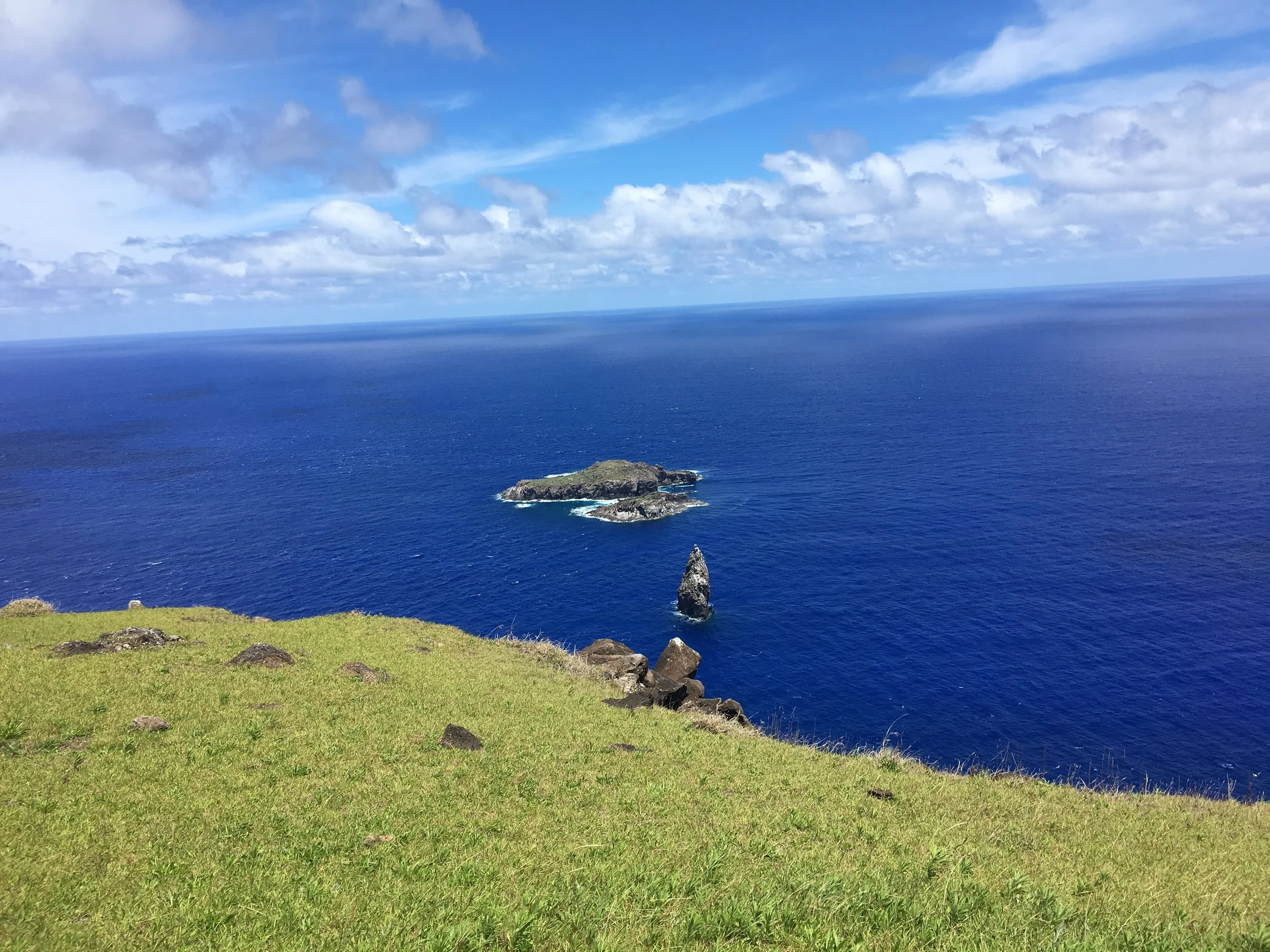
Looking out from Rano KauWe made plenty of other stops during our tour, including Te Pito Kura, where our guide showed us the smooth stone associated with Te Pito o Te Henua, often translated as the “navel of the world.” Local tradition connects the site with Rapa Nui history and mana, or spiritual power. I don't remember this stop nearly as vividly as Tongariki or Rano Raraku, but that's almost inevitable on a day when you're taking in so much at once.
By the end of our tour, we'd covered an enormous amount of the island. More importantly, though, we understood so much more about what we'd been looking at since we arrived.
That's why I'm especially glad we toured early in the trip. The following day, we rented an ATV and explored on our own. We could go back to places we liked, return to Anakena, and simply drive around without trying to cram in another checklist of sights. After spending the previous day learning about the island, it was nice to have time to just enjoy being there.
We flew back on Day 4, and honestly, the amount of time felt just right for us. Three days gave us enough time to really explore the island, learn about its history and then have some time on our own without feeling rushed.
Easter Island had seemed so intimidating to plan from afar. Once we were there, it was anything but. It's small, easy to settle into and unlike anywhere else we've traveled.
And after years of seeing those moai in books and photographs, there's still something a little surreal about knowing we actually stood beside them.
Worth KnowingLearn a Little Before You Go - I wish I'd known more about Rapa Nui history before we arrived. Our guide was incredibly helpful, but even a documentary or a few podcasts beforehand would have given us more context for everything we were seeing.
Three Days Worked For Us - Three days on Easter Island felt like the right amount of time. We had a full day with our guide, another day to explore on our own, and enough time to enjoy the island without feeling rushed.
Trip Highlights
Four experiences we’d highly recommend
Ahu Tongariki
We visited Ahu Tongariki at sunrise, which meant a very early start but was absolutely worth it. As the sky slowly brightened behind the 15 moai, the statues were silhouetted against the changing colors of the morning. It was one of the most memorable moments of our time on Easter Island - and an incredible way to experience one of its most iconic sites.
Rano Raraku
Rano Raraku is the quarry where most of Easter Island's moai were carved. Dozens of statues remain scattered along the slopes, including some that were never completed or transported elsewhere. Seeing them here gives you a fascinating look at how the moai were created and the enormous effort that went into them.
Anakena Beach
Anakena Beach was beautiful enough that we went back on our own after first visiting during our private tour. With white sand, clear blue water and moai overlooking the shoreline, it's a setting you really won't find anywhere else. It was also a great place to slow down and enjoy a different side of the island.
Rano Kau
Rano Kau is one of the places I remember most vividly. Standing high above the island, with the enormous volcanic crater beside us and blue Pacific stretching out in seemingly every direction, you really feel just how isolated Easter Island is. It's beautiful, a little surreal, and a view that has stuck with me.
Moments from our trip
OUR VISIT: OCTOBER 2016
KNOW BEFORE YOU GO

BEST TIME TO VISIT

October – April: Warmer temperatures make this a popular time to visit Easter Island, though rain is possible year-round.
May – September: Cooler temperatures and somewhat fewer visitors, though Easter Island can still be visited year-round.
OUR TAKE: We visited in October. After some clouds and light rain early on, Easter Island was warm and comfortable. A light jacket was useful for cooler mornings and evenings.
CURRENCY

Chilean Peso (CLP). Credit cards are widely accepted in Santiago. On Easter Island, cards are accepted at many hotels, restaurants and businesses, but carrying some pesos is a good idea for smaller purchases.
OUR TAKE: We ended up needing more cash on Easter Island than we expected and had to find a bank to withdraw more. We'd recommend arriving with some pesos rather than relying entirely on cards.
ENTRY REQUIREMENTS

U.S. citizens can visit Chile for up to 90 days without a visa.
Easter Island has additional requirements, including an online entry form, round-trip ticket and proof of registered accommodations. Stays are limited to 30 days.
Requirements can change! Refer to the Travel.State.Gov site for more info.
GETTING AROUND

In Santiago, rideshare apps and public transportation make getting around the city relatively easy. On Easter Island, the central town of Hanga Roa is very walkable, but the island's major archaeological sites are spread out and require transportation to reach.
OUR TAKE: We used Uber in Santiago and primarily relied on our private tour transportation to explore Easter Island. We also rented an ATV for a day, which was a common way to get around and gave us an easy way to explore more of the island on our own.
LANGUAGE

Spanish is the official language of Chile. On Easter Island, you'll also hear Rapa Nui, the Indigenous Polynesian language of the island.
OUR TAKE: We managed with English and basic Spanish, particularly in Santiago and with those working in tourism.
HEALTH & VACCINES

No vaccinations are required for entry into Chile. The CDC recommends being current on routine vaccinations and recommends Hepatitis A for unvaccinated travelers; additional recommendations can depend on your age and itinerary.
OUR TAKE: We didn't need any special vaccinations specifically for this trip.
Requirements can change! Refer to the Travel.State.Gov site for more info.
POWER REQUIREMENTS

Type C and L plugs | 220 V | U.S. travelers will generally need a plug adapter, and because Chile uses 220V, check that electronics are dual voltage before plugging them in.
Travel Notes
Little tips and local finds that made our trip even better
Hanga Roa is very walkable, but renting an ATV gave us much more freedom to explore beyond town. Rentals were easy to find and reasonably priced, and having one made it much faster to get around the island on our own. It's a great option for exploring on your own outside of your guided tour.
Transportation TipRent an ATV to Explore
A guide adds so much to understanding the history and culture behind the places you're seeing on Easter Island. We toured with Easter Island Travel, starting with sunrise at Ahu Tongariki and continuing to sites across the island. Many archaeological sites now require an accredited guide, making this even more important to arrange ahead of time.
Booking TipExplore With a Local Guide
Easter Island has accommodations across the spectrum, and finding the right fit took some searching. We landed on Kona Koa Lodge, and it felt like our own little secret. The beautiful, hand-built lodge sat right along the ocean with unbeatable views, a small kitchen, and plenty of privacy. It was easily one of our favorite finds on the island.
Hotel TipLook Beyond the Traditional Hotel
Last updated: September 2026