
JAPAN
👥 Family ✦ Bucket List ◎ Cultural
Japan completely captured us from our first visit - and somehow, every trip back has only made us love it more. There’s an energy here that’s hard to describe: centuries of history woven into cities that feel like they’re constantly racing toward the future. One minute you’re surrounded by the neon lights of Shinjuku or standing beneath Osaka’s larger-than-life Glico Man; the next, you’re walking through the seemingly endless red torii gates of Fushimi Inari in Kyoto. The food, the people, the traditions, the sheer vibrancy of it all keep us fascinated no matter how many times we return. Japan isn’t just one of our favorite destinations. It’s the place we can’t seem to stay away from.
Destination GuideVISITED
3 trips (2018, 2019, 2025)
LENGTH OF STAY
20 days total
TRAVEL STYLE
Couple + Family
Our Experience
Japan had been on our bucket list for years, so when we got married in 2018, we knew almost immediately that it had to be part of our honeymoon. That first trip started what has become a genuine love for the country. We returned the very next year, this time basing ourselves in Osaka and exploring more of Japan, and then came back again in 2025 once our son was old enough to appreciate the bright lights, excitement and sheer energy of Tokyo. At this point, it feels less like will we go back? and more like when are we going back?
It’s hard to pinpoint exactly what makes Japan so special to us. Somehow, it manages to have so much happening at once - bright lights and packed streets, quiet temples and gardens, incredible food, centuries of history and some of the most modern cities we’ve visited. Add in how kind people have been to us on every trip, and it’s one of those places we never seem to run out of reasons to love.
the full story…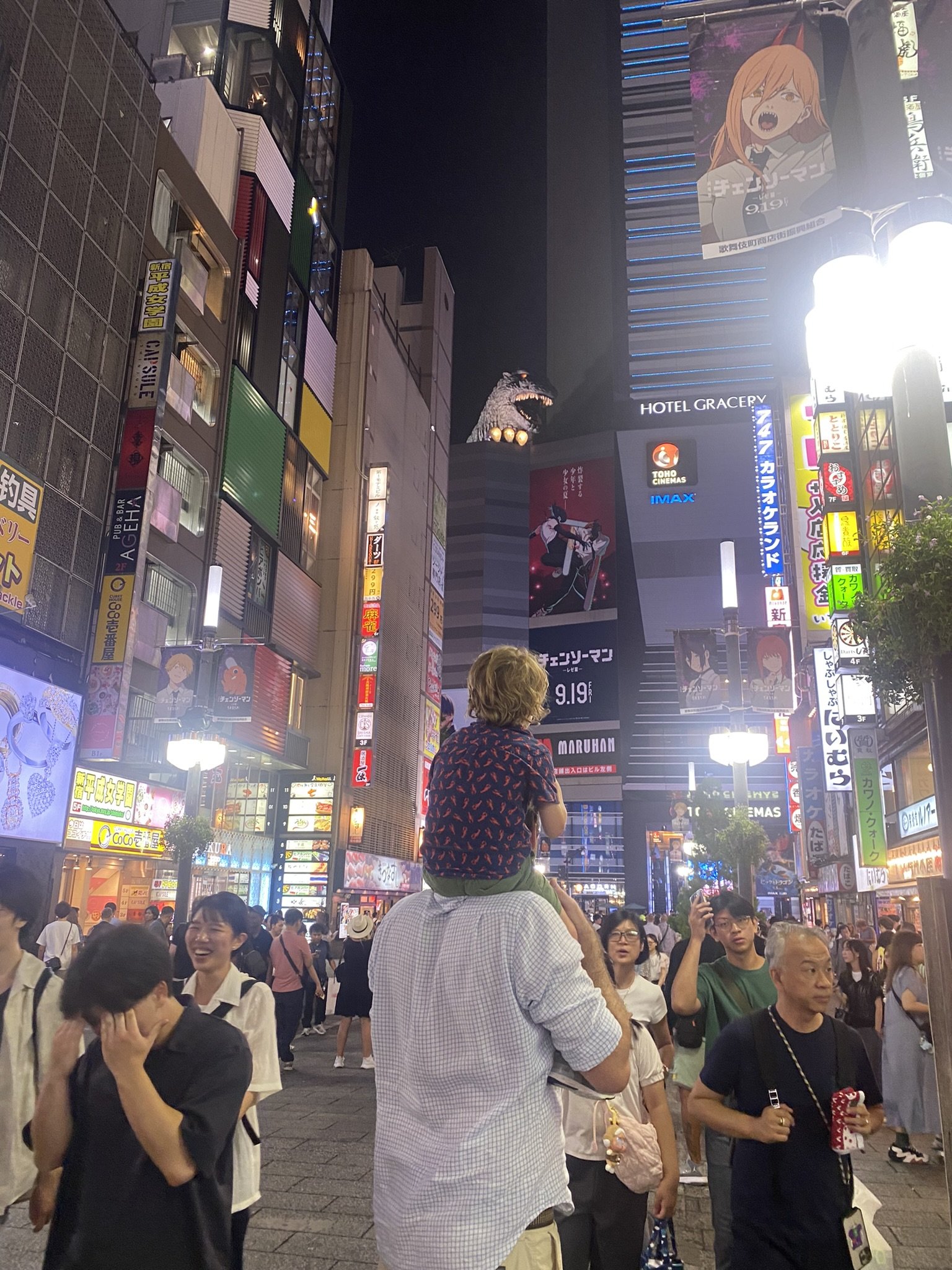
Shinjuku after darkSenso-ji, on the other hand, is somewhere we would absolutely make time for. Tokyo’s oldest Buddhist temple is impressive in its own right, but we love the entire area around it just as much. There are shops, restaurants, food stalls, souvenirs and endless opportunities to wander around and take pictures. We came back again with our son in 2025 and even recreated one of our favorite photos from 2018. The skyline and our family may have changed a little, but it was fun seeing how familiar the area itself still felt.
Our guide also introduced us to a completely different side of Tokyo in Shinjuku. Memory Lane was filled with tiny bars and restaurants squeezed into narrow alleyways, with barely enough room for a handful of people in some of them. Nothing about it felt particularly fancy, which was part of the appeal. Near the end of our tour, we sat over beers with our guide, chatted with some of the Japanese patrons around us and somehow ended up talking about everything from our newly married life to her children. It felt less like being on a tour and more like spending an afternoon getting to know people in Tokyo.
TOKYO
On our first visit, one of the best decisions we made was booking a private tour near the beginning of the trip. We like doing this somewhere new because it gives us a chance to get our bearings, see some of the essentials and ask questions before heading off on our own. In Tokyo, that ended up being especially helpful. Our guide helped us prioritize what we wanted to see, introduced us to places we never would have known about and, maybe most importantly at the time, showed us how to navigate the subway. By the end of that first day, Tokyo already felt a little less intimidating.
One of the first places she took us was the Imperial Gardens. They were beautiful and gave us our first glimpse of the quieter, more serene side of Japan, though looking back, I wouldn’t consider them essential if your time is limited.
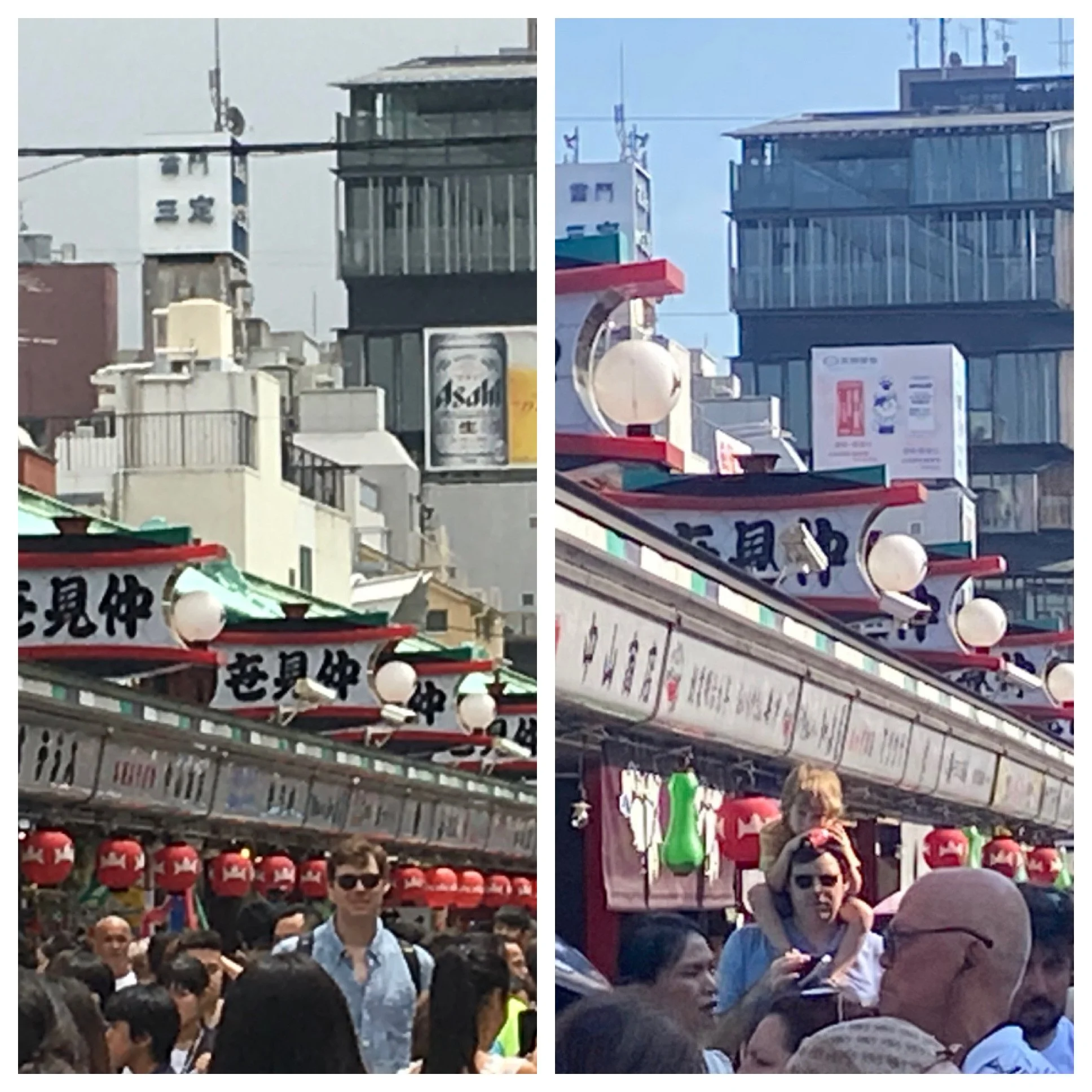
Senso-ji, then and nowGolden Gai has a similar tiny-alley feel but is much more focused on bars and nightlife. It can certainly feel touristy, and some of the bars charge a cover, but we loved the social side of it. With only a few seats in many places, you naturally end up talking to the bartender and the people squeezed in around you.
That first trip also taught us that some of our favorite Tokyo experiences didn’t have to be traditional sightseeing at all.
One rainy day, we were trying to figure out what we could do without spending the whole day outside. We started searching for ideas and saw that the Tokyo Giants were playing at the Tokyo Dome that day. A few hours later, we had standing-room tickets and were inside watching Japanese baseball - something that hadn’t been on our itinerary at all. We already knew baseball was huge in Japan, but seeing a familiar sport through an entirely different culture was so much fun, from the fans and concession food to the cheerleaders. It ended up being one of those completely unplanned experiences that fit the day perfectly.
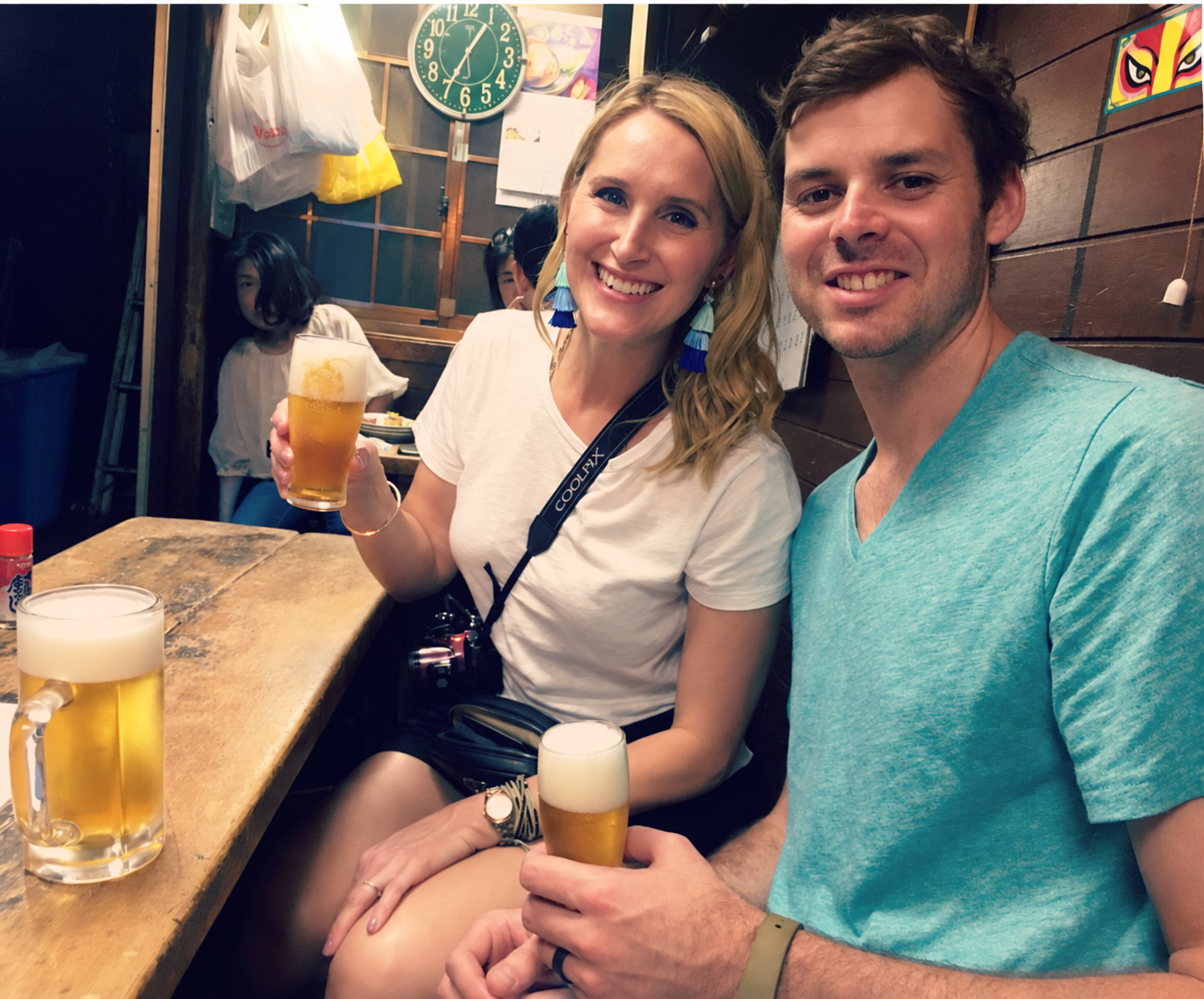
Beers in Memory LaneAnother night, we leaned into something we associated much more with Japanese nightlife: karaoke. We figured we’d rent a room for about 30 minutes just to say we had tried it. An hour and a half later, we were still adding time and laughing at ourselves. It was literally just the two of us, and we still have some of the funniest videos from that night.
Sumo gave us another experience that felt distinctly Japanese, although not quite in the way we originally imagined. There wasn’t a tournament taking place during our visit, so instead we were given information through our hotel about a practice we could watch. It wasn’t some elaborate tour or show - we simply sat nearby and watched the athletes train. I wouldn’t describe it as action-packed, but being that close to a sport we knew so little about made it fascinating in a completely different way.
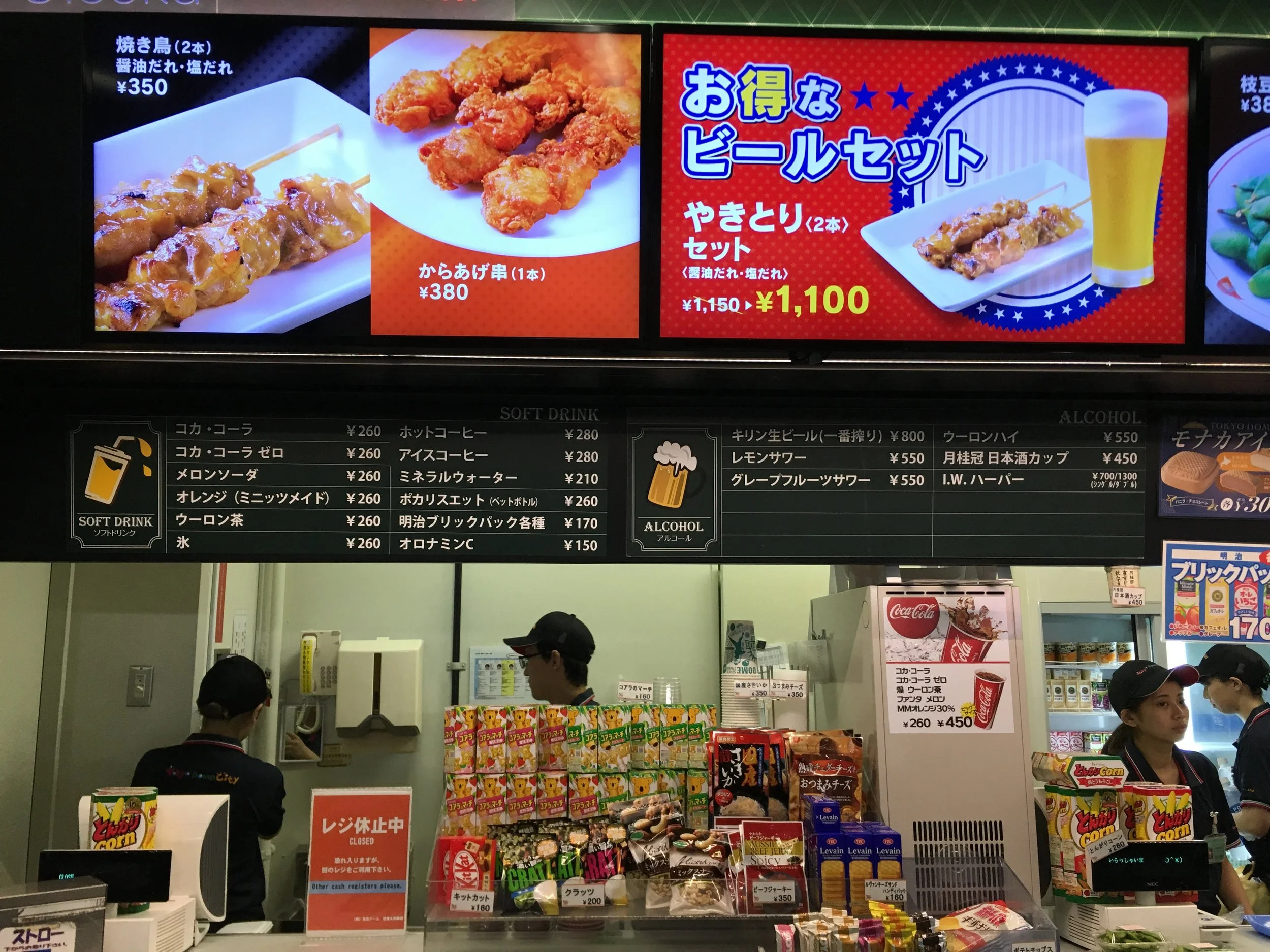
Baseball snacks, Japan-style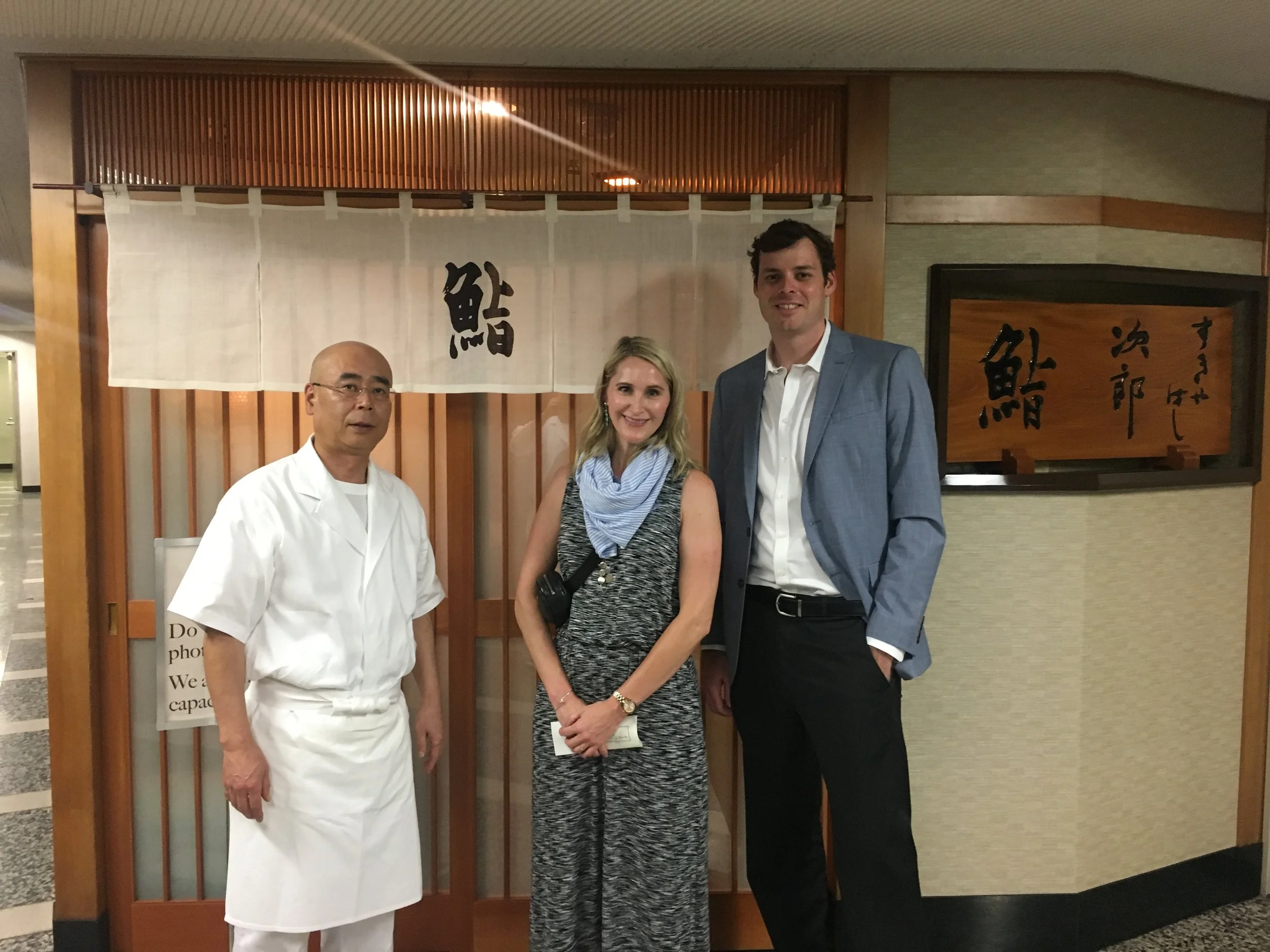
With the head chef at Sukiyabashi Jiro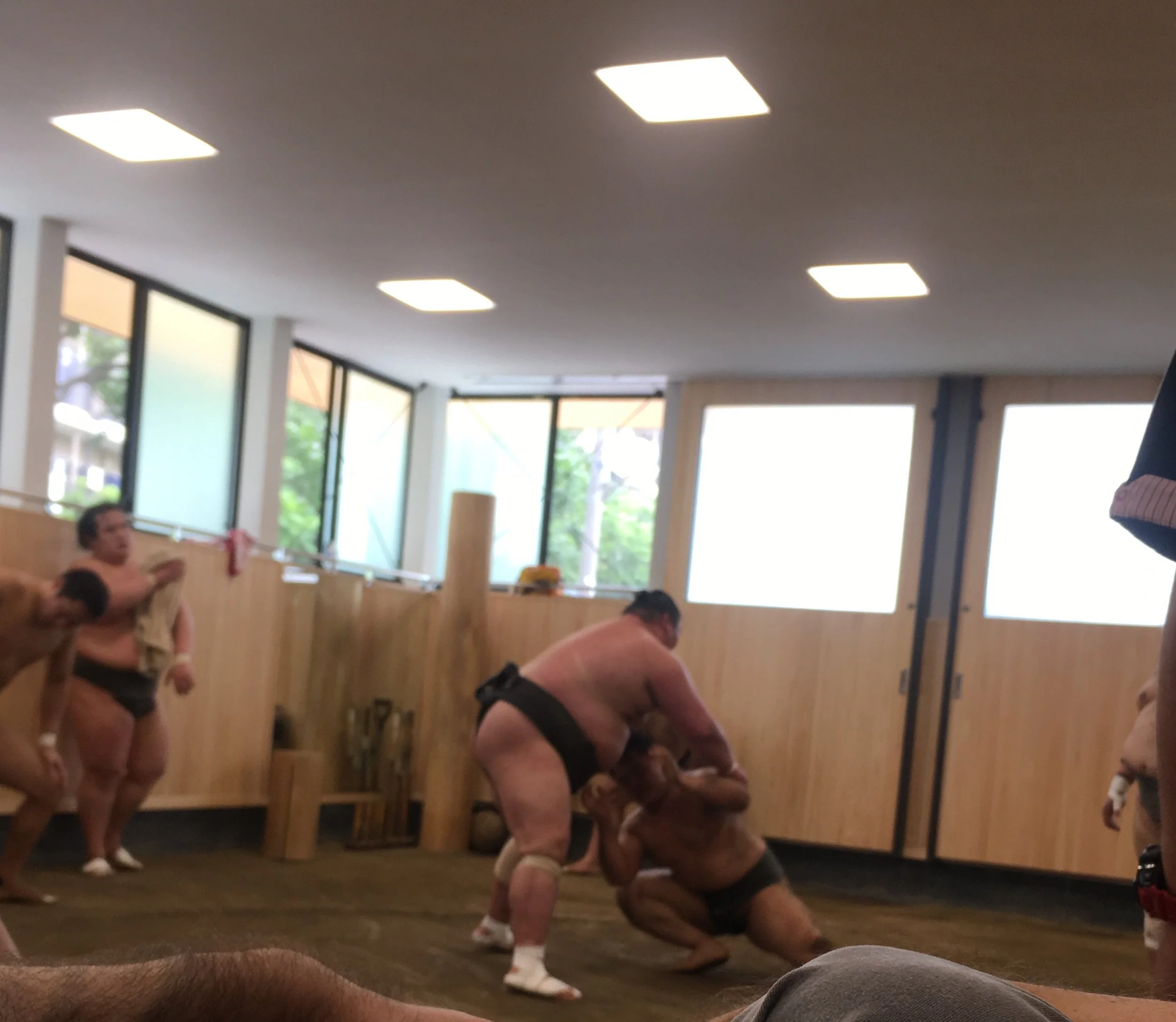
Up close at sumo practiceFood was another big part of that first Tokyo trip, and we decided this was one place where we were willing to splurge on a couple of experiences. One of those was Sukiyabashi Jiro, the tiny sushi restaurant made internationally famous by the documentary Jiro Dreams of Sushi and, at the time of our visit, its three Michelin stars. Our hotel helped us secure a reservation in advance, and the experience felt every bit as special as we hoped. We sat at the small counter watching each piece of sushi prepared directly in front of us, with the option at the end to order more of our favorites. It was intimate, incredibly fresh and one of those meals that felt worthy of the trip itself. As a side note, the restaurant is no longer included in the Michelin Guide because it stopped accepting general reservations, not because Michelin downgraded the quality of the food.
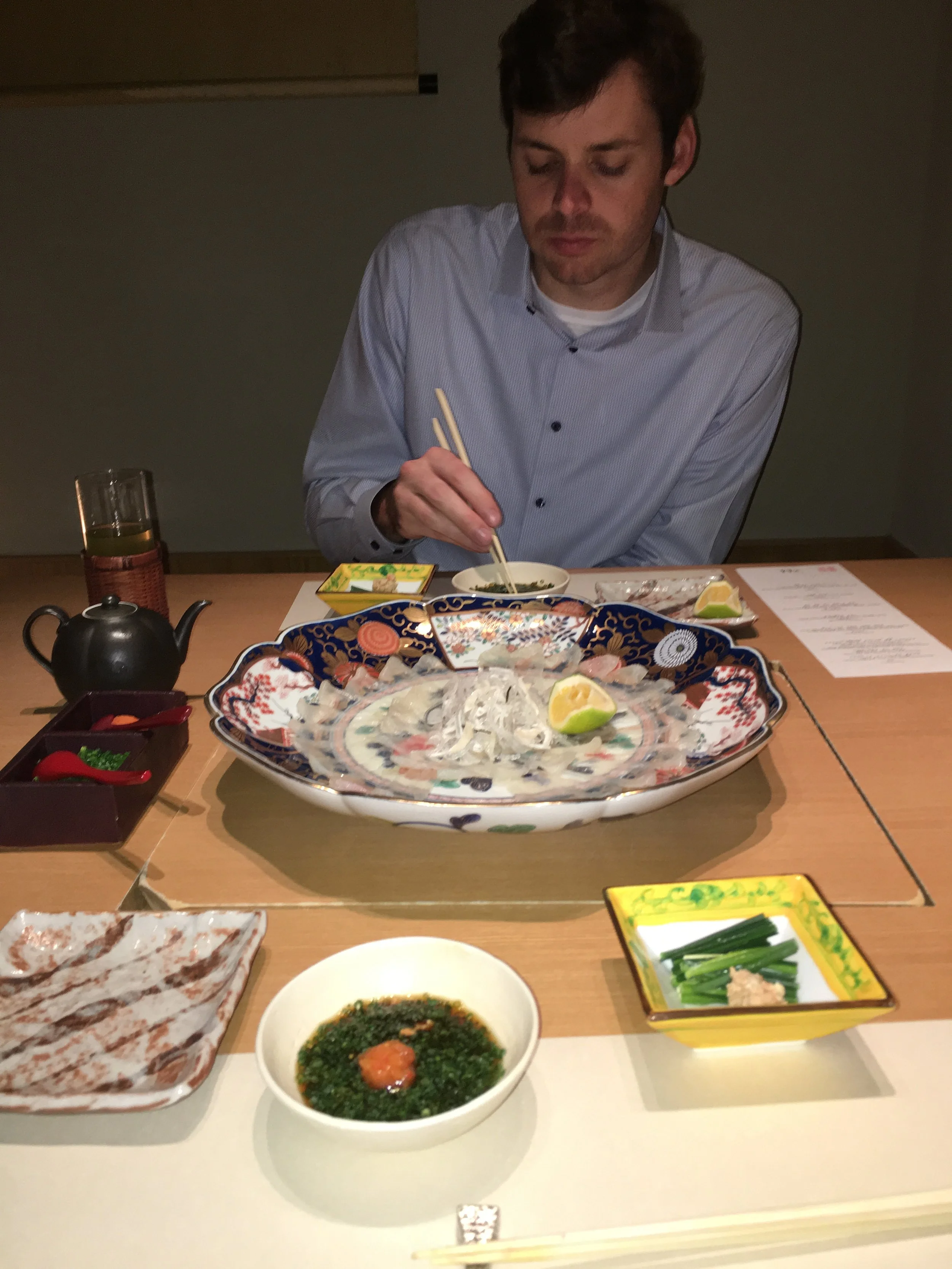
Trying fugu sashimiAnother meal was memorable for a completely different reason: fugu, or pufferfish. Because parts of the fish can contain a dangerous toxin, its preparation is tightly regulated and requires specialized training, which made sitting down to eat it feel like an experience in itself. At Usuki Fugu Yamadaya, we had it several different ways - sashimi, fried, in hot pot and even as porridge - while sitting shoeless in our own private room. The whole evening felt elegant, distinctly Japanese and just adventurous enough to make us think, when else are we going to do this?
And then there was the Robot Restaurant. There was absolutely nothing subtle about it. Lights, music, costumes, giant moving displays and one completely ridiculous scene after another - we spent most of the show staring at everything around us wondering what could possibly come out next. It was loud, touristy, completely over the top and one of the most vividly memorable things we did in Tokyo.
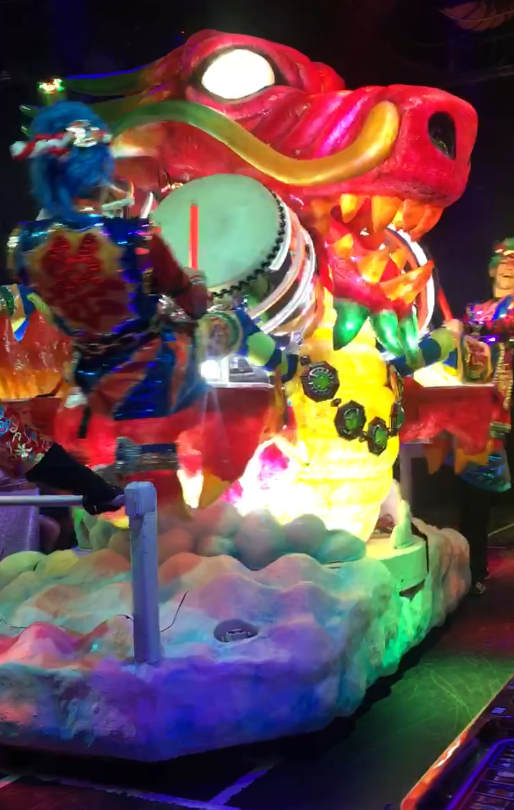
Robot Restaurant madnessThe original Robot Restaurant has since closed, but Samurai Restaurant has stepped into that space as its successor, with the same kind of intentionally over-the-top energy. We haven’t tried the newer version ourselves, but it operates in the same Shinjuku space and has been described as the new incarnation of Robot Restaurant. Friends who have gone since have also described something that sounds very familiar.
Returning to Tokyo with our son in 2025 gave us a chance to see a completely different side of a city we already loved. On our earlier trips, we had focused heavily on food, history, nightlife and cultural experiences. This time we deliberately mixed some of that with activities we knew would keep a young child engaged.
That included Tokyo Disneyland and DisneySea. We’ve been to Disney parks in the U.S. before, so I wasn’t necessarily expecting Japan Disney to become a major trip highlight, but it genuinely impressed us. Some rides and experiences were familiar, while DisneySea felt much more unique. The parks were incredibly clean, the staff was wonderful and even the food was fun to explore. We visited in August, so the heat was intense - our travel stroller, portable fan and umbrella for shade were lifesavers. If we returned to Japan with our son again, I could easily see us doing DisneySea another time.
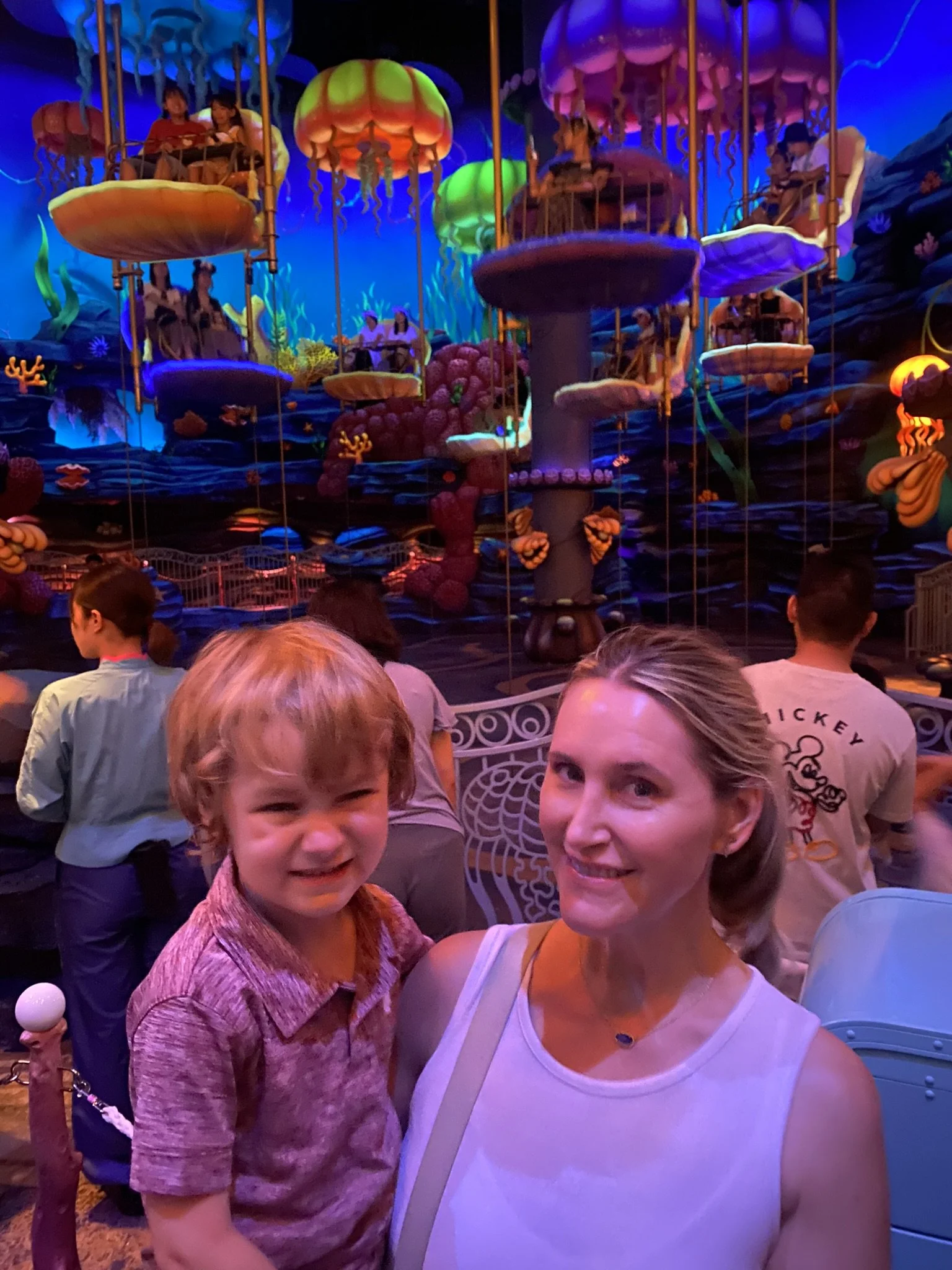
Ariel’s Playground at DisneySea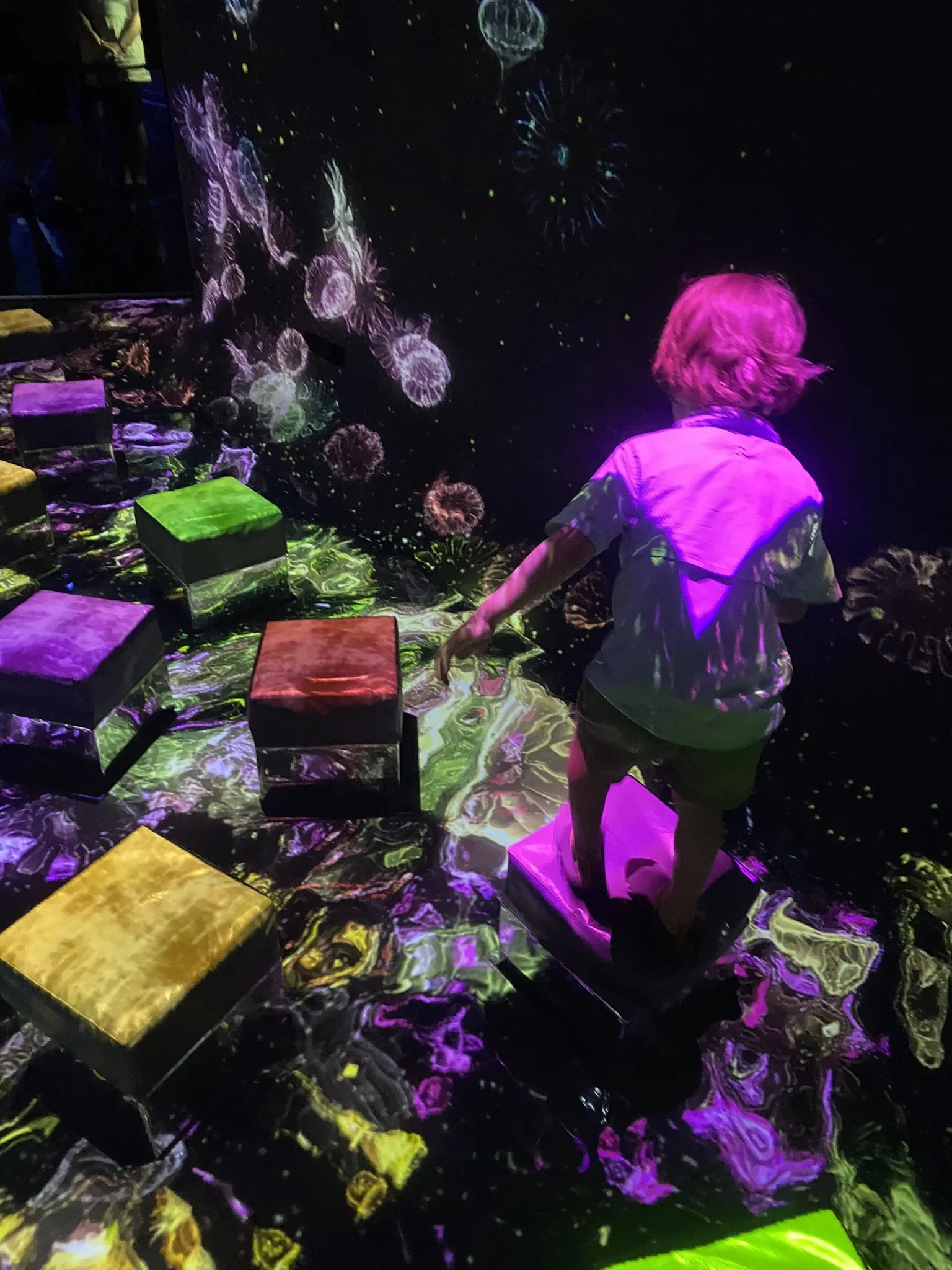
Exploring teamLab PlanetsteamLab Planets was another great addition with a child. This isn’t a traditional museum where you simply walk around looking at things. The experience moves you through completely different immersive environments involving light, sound, texture, movement and even water - prepare to literally get your feet wet. Our son stayed engaged because something completely new seemed to be waiting around every corner, and in the middle of an August trip, spending a few hours indoors was an added bonus. I wouldn’t necessarily call it essential for every visitor, but with kids - or if you just want something wildly different from another temple or sightseeing stop - we thought it was well worth it. If you plan to go, buy tickets in advance. You’ll have a designated entry window and line up during that timeframe before heading in.
We also went back to the arcades, something we had enjoyed on our first trip as a couple and now got to experience with our son. Even when we had absolutely no idea what we were doing, the lights, sounds, games and photo booths were part of the fun.
For something quieter, Meiji Jingu gave us another reminder of just how quickly Tokyo can change around you. One minute you’re walking through busy Harajuku and the next you’re surrounded by trees and a much calmer atmosphere. We actually found Meiji Jingu more memorable than Harajuku itself. Harajuku is still fun to see for the crowds, shops, photo ops and maybe a crepe, but personally we wouldn’t build our Tokyo itinerary around it. If you’re already nearby for Meiji Jingu, though, it’s easy enough to experience both.
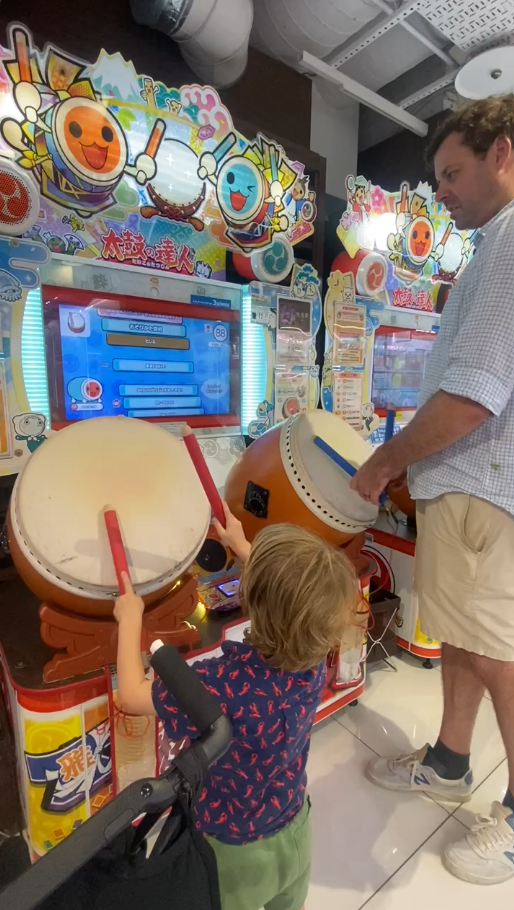
Arcade Fun in TokyoOSAKA
For our second trip, we wanted to experience another part of Japan rather than simply recreating our first visit, so we based ourselves in Osaka. If Tokyo introduced us to Japan, Osaka gave us another version of the energy we already loved. Dotonbori is probably the image that sticks with us most - all those lights, signs and crowds, capped off by the famous Glico running man. Go at night, take the obligatory running-man picture and embrace the fact that everyone around you is doing exactly the same thing. Nearby Shinsaibashi-suji gave us plenty more shopping, food and people-watching.
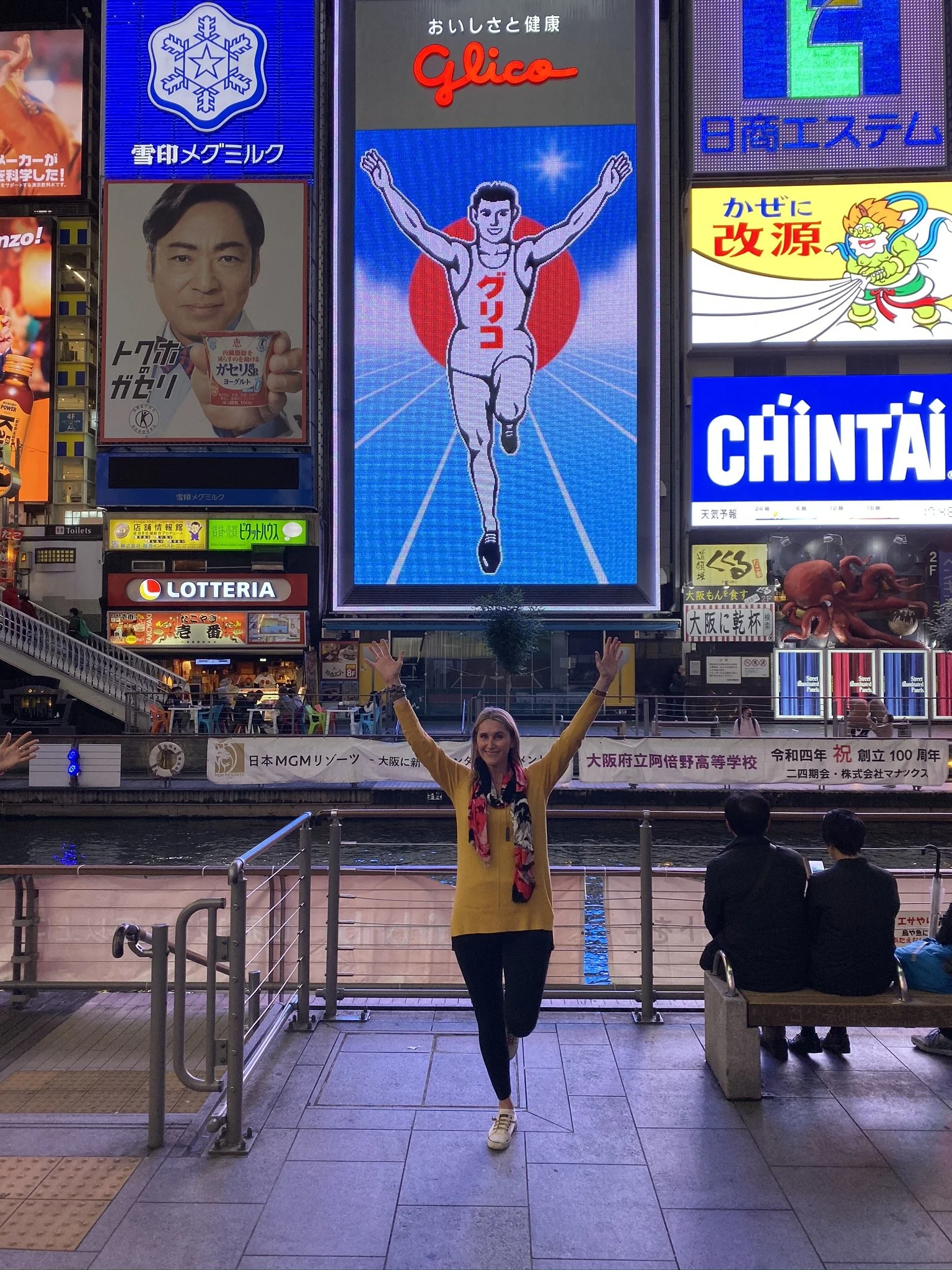
Dotonbori at nightWe also made time for Osaka Castle, one of the city’s defining landmarks and a place closely tied to Toyotomi Hideyoshi and the period when Japan was being unified. For us, it offered a little historical context for the city and a completely different experience from the lights, shopping and food of modern Osaka.
Then, because this is Japan and apparently history needed to be balanced with instant noodles, we went to the Cup Noodles Museum.
It’s a little out of the way, but we had so much fun creating our own Cup Noodles - decorating the container, choosing our ingredients and watching the whole thing get sealed up. Those cups somehow survived the trip home and are still sitting on our giant souvenir shelf years later. We joke that if there’s ever a zombie apocalypse, at least we’ll have dinner covered.
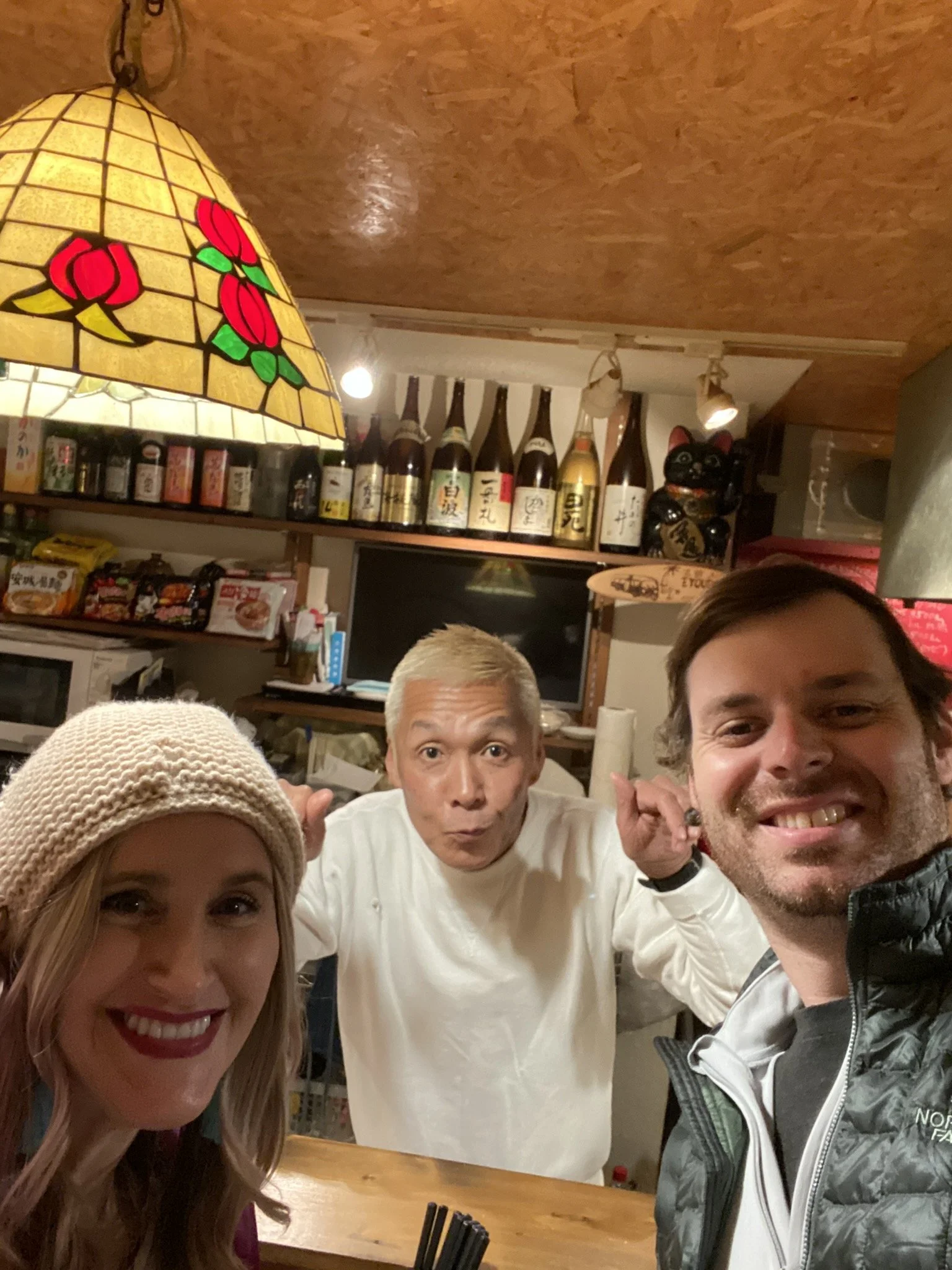
Making friends in OsakaOsaka also gave us a pretty good lesson in just how far Google Translate can get you. One night, we stopped into a random little bar and ended up spending nearly two hours talking with the bartender almost entirely through our phones. Somehow, it worked - and what could have been a quick drink turned into a genuinely fun conversation with someone we otherwise never would have been able to talk to. Years later, it’s still one of those small travel moments we remember so clearly.
One of my favorite memories from this trip, though, came from somewhere we hadn’t planned to visit at all. After using the Shinkansen for day trips to Kyoto and Hiroshima, we decided we liked traveling by train enough to find somewhere else to go. We ended up choosing Kurashiki, a place that hadn’t been anywhere on our radar before the trip. Despite not technically being a tiny town, it felt worlds away from the noise and lights of Osaka. We wandered along canals and traditional buildings, felt noticeably farther from the major tourist trail and got some of our favorite souvenirs of the entire trip - painted artwork that we had framed and still have hanging in our bedroom today. Adam may also have attracted a few more stares than usual at 6'5".
KYOTO
Kyoto was the part of our trip where I quickly realized we needed to make some choices. There are so many temples and shrines that my original list was far longer than anything we could realistically fit into a couple of day trips from Osaka. I narrowed it down based on what seemed most interesting to us, how spread out everything was and how much walking we realistically wanted to do. I’d recommend doing the same rather than trying to check off every famous site.
Fushimi Inari’s torii gates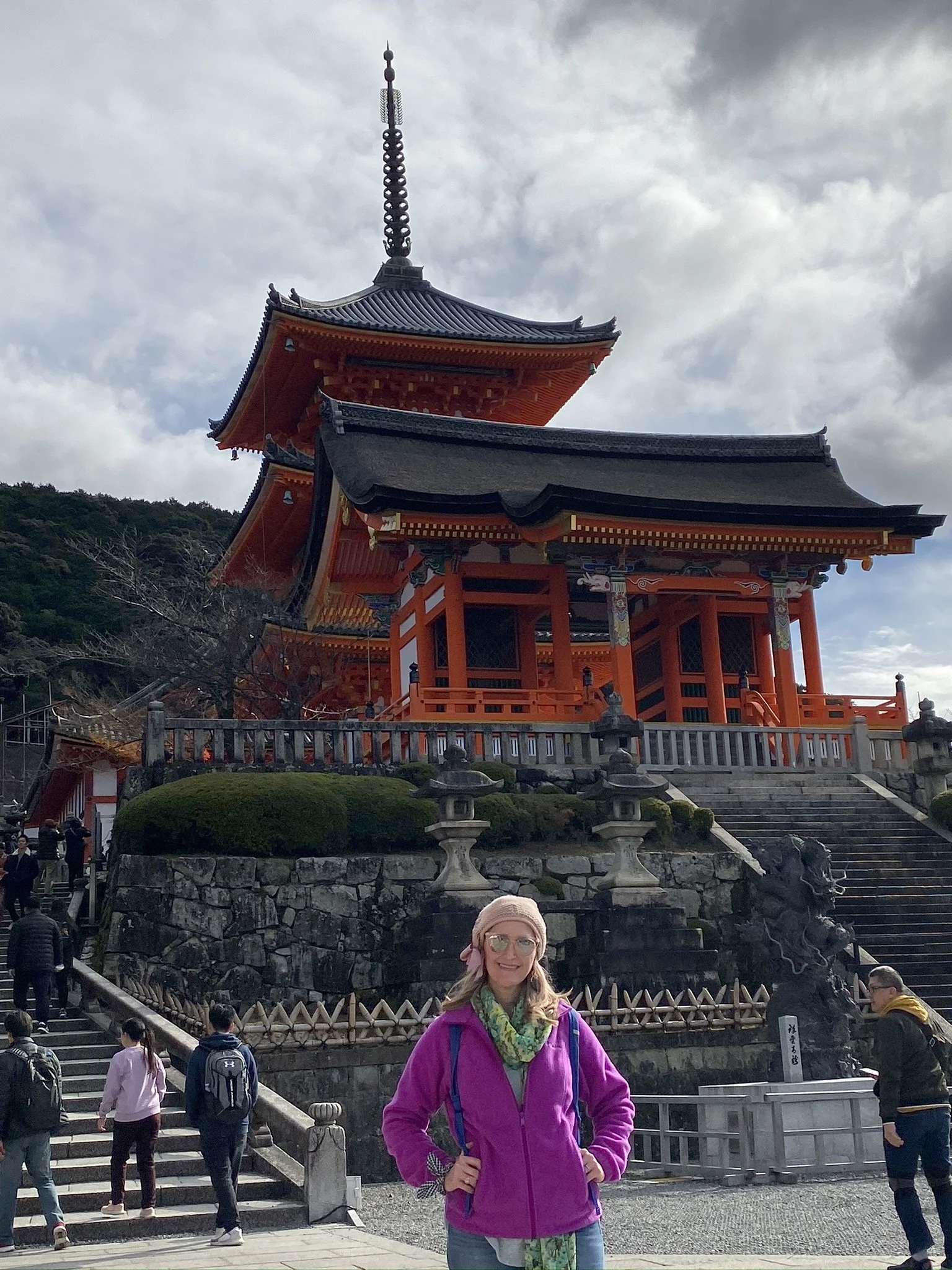
Kiyomizu-dera in Kyoto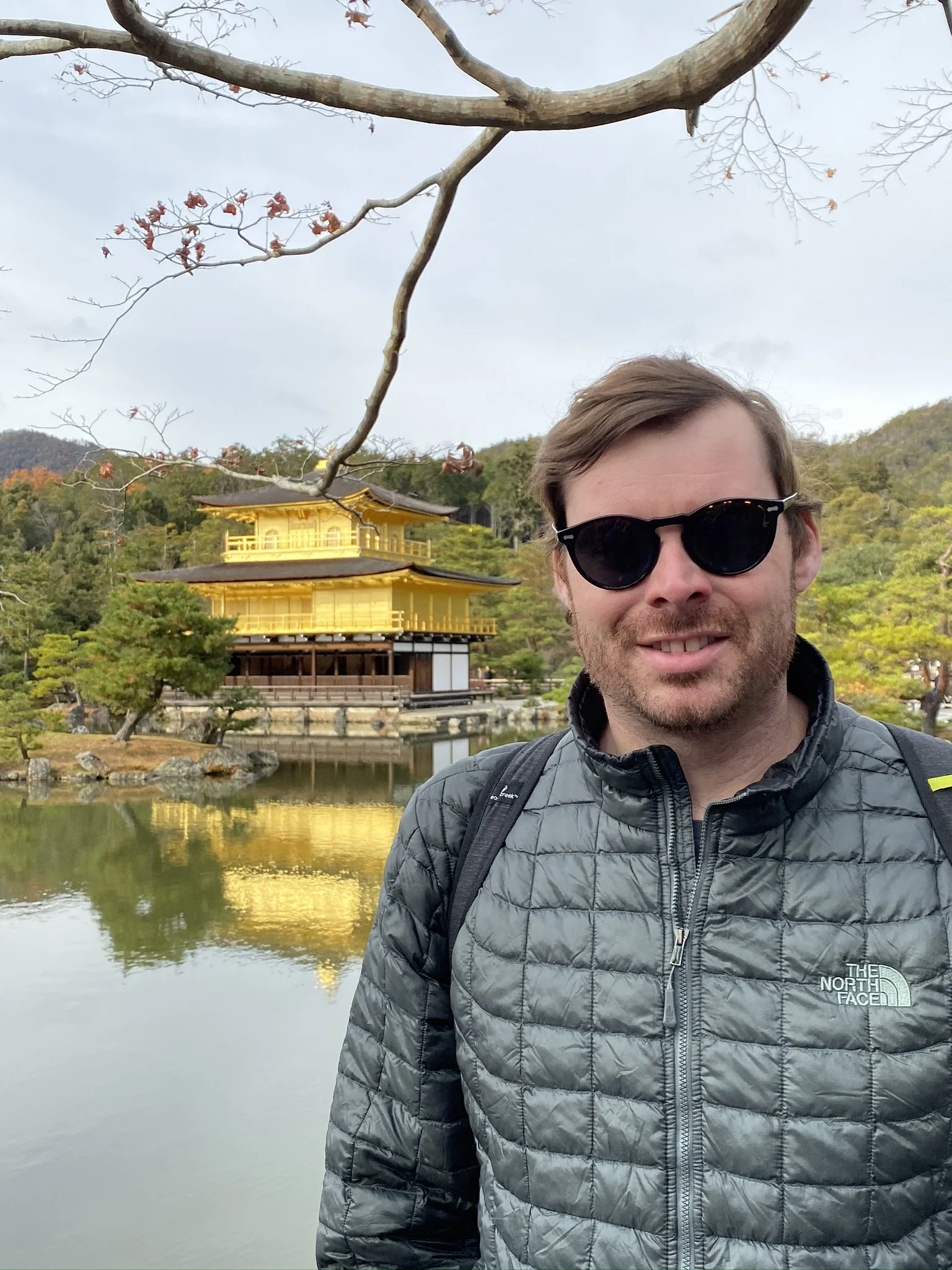
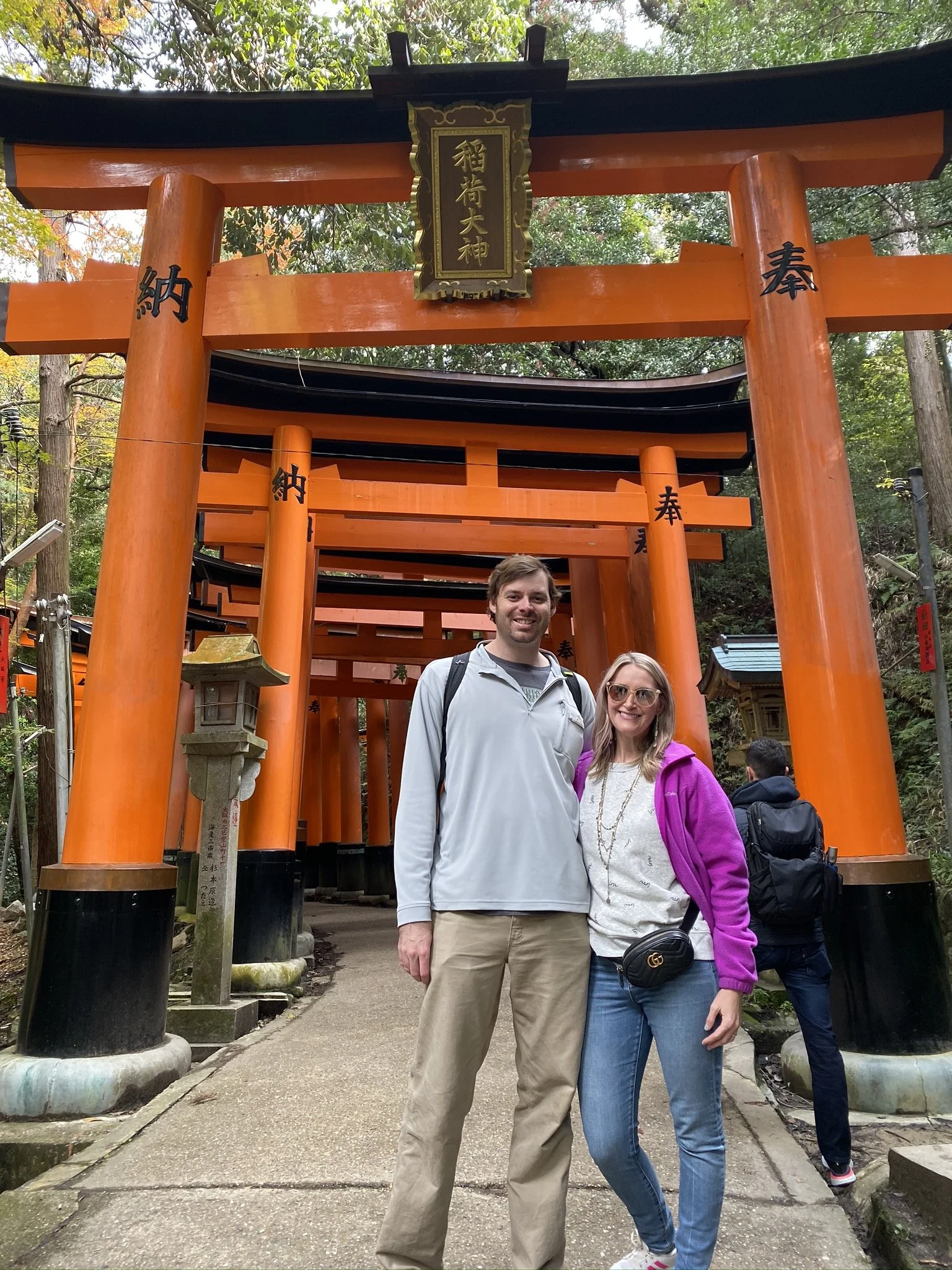
Kinkaku-ji, the Golden PavilionFushimi Inari Taisha was an easy choice because it looks unlike almost anywhere else. Walking beneath seemingly endless rows of bright torii gates as they climb into the wooded hillside was every bit as striking as the photos make it look. It also involved plenty of walking and climbing, so comfortable shoes definitely matter here.
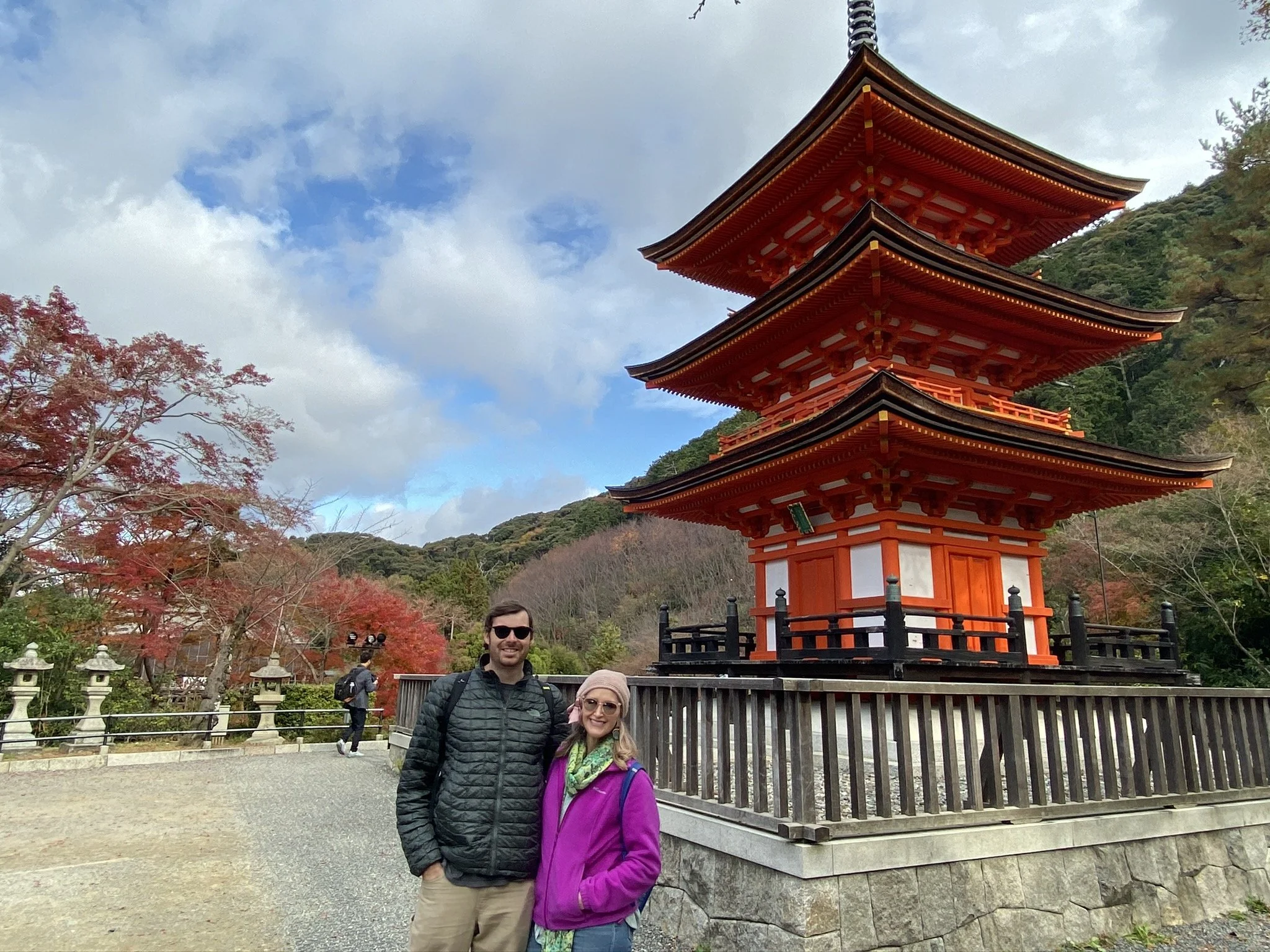
Kiyomizu-dera made my list largely because of its setting and views. Its famous wooden veranda projects out from the mountainside, opening up wide views over Kyoto, and during our visit the remaining fall colors made the scenery even better.
Kinkaku-ji, or the Golden Pavilion, was completely different again. The gold-covered pavilion reflected across the pond is the kind of sight that’s hard to confuse with anything else, which is exactly why it survived the cut when I was narrowing down our list. It originally served as a shogun’s retirement villa before becoming a Zen temple. For us, two or three major temple or shrine stops in a day was plenty. The sites can be spread apart, many involve more walking than you expect, and at some point even beautiful temples can start to blur together. I’d rather really enjoy a few than spend the day racing from one to the next.
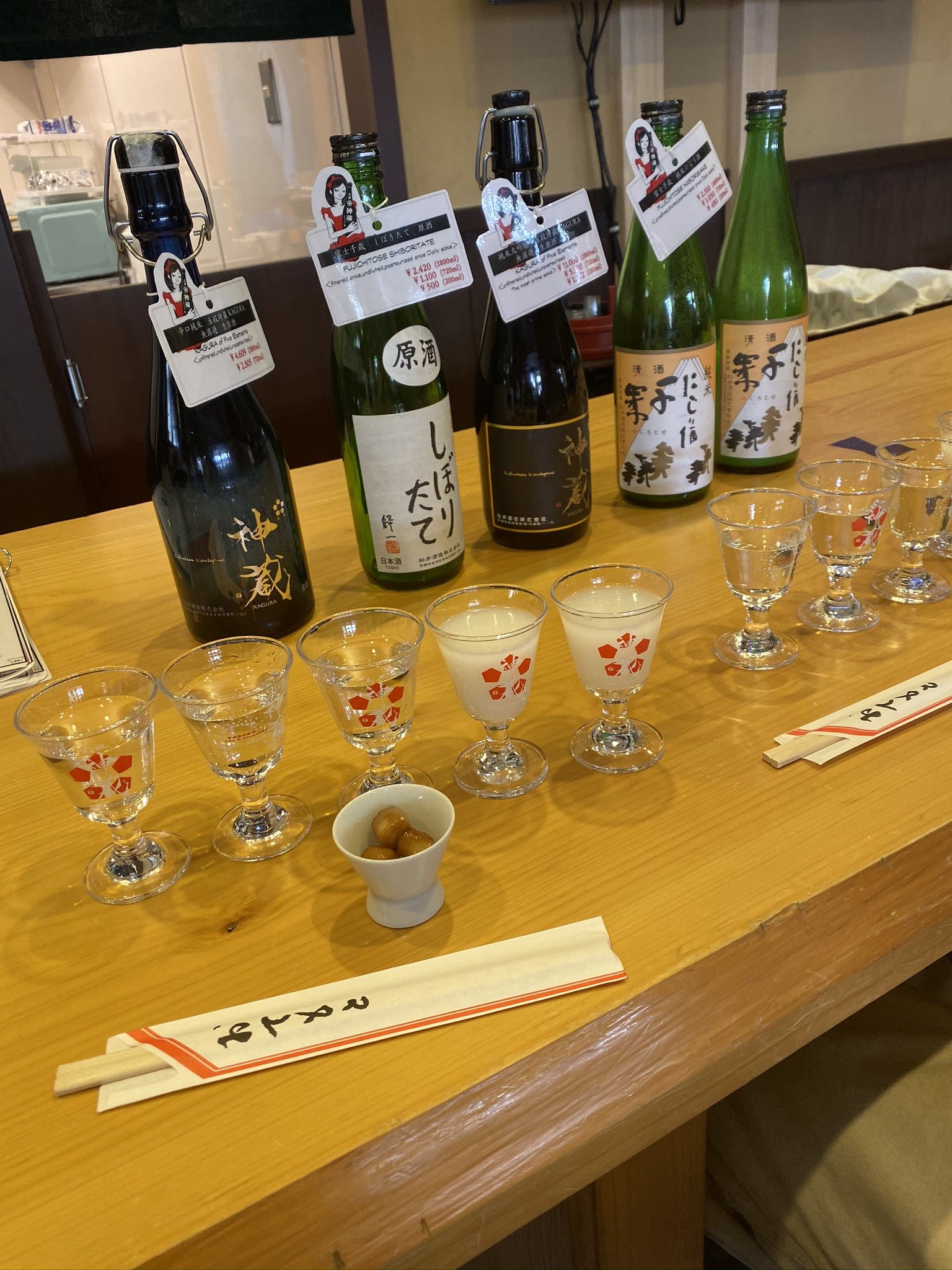
Sake tasting in KyotoOne of our favorite breaks from temple hopping came when we stopped for a sake tasting at Matsui Sake. We’re used to wine tastings back home, but sitting down for a sake flight in Kyoto felt much more connected to where we were. The person helping us happened to be American and spoke both English and Japanese, so we were also able to ask plenty of questions about what we were drinking. More than anything, it gave us a chance to sit down, slow down and take everything in before heading back out again.
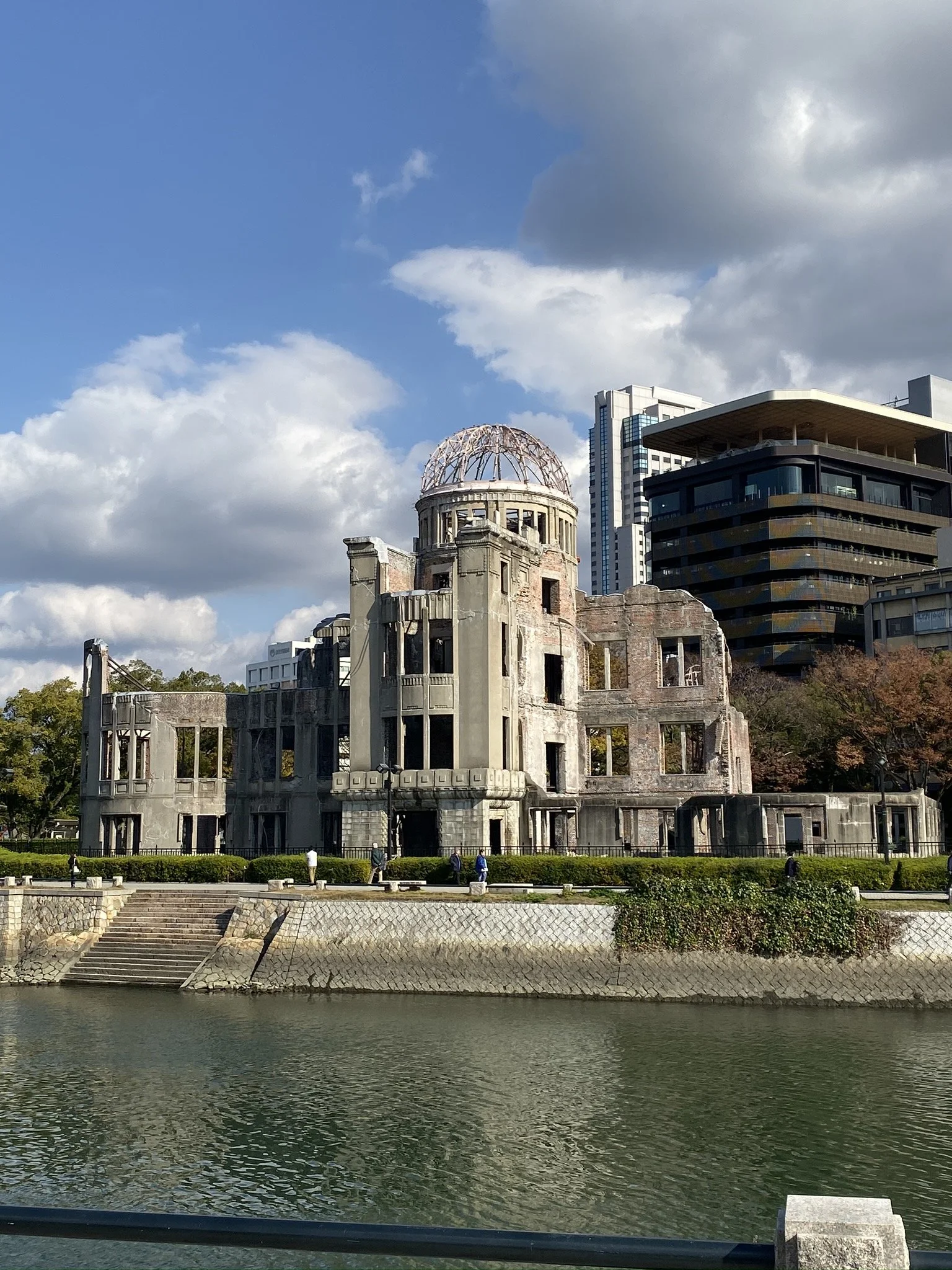
Hiroshima’s Atomic Bomb DomeHIROSHIMA
We also used Osaka as our base for a day trip to Hiroshima, which gave us one of the most sobering experiences of any of our Japan trips.
The Hiroshima Peace Memorial and Museum obviously carries a very different tone from almost everything else on this page. Walking through the museum, seeing artifacts and personal remnants from the bombing, and then standing near the Atomic Bomb Dome made the history feel far less abstract. It was eerie, poignant and deeply thought-provoking.
We wouldn’t say a first trip to Japan is incomplete without Hiroshima, especially if your itinerary keeps you around Tokyo. But because we were already based in Osaka, it made sense as a day trip - and we were very glad we made the time for it.
FOOD IS PART OF THE EXPERIENCE
Even after all of that, some of our favorite Japan memories are incredibly simple.
We ate plenty of sushi and ramen, but part of the fun was embracing all the ways food worked differently than what we were accustomed to. At some ramen shops, you place your order through a vending machine before sitting down. Others may have little individual counter spaces where you eat by yourself. Don’t overthink it - order something and go with it.
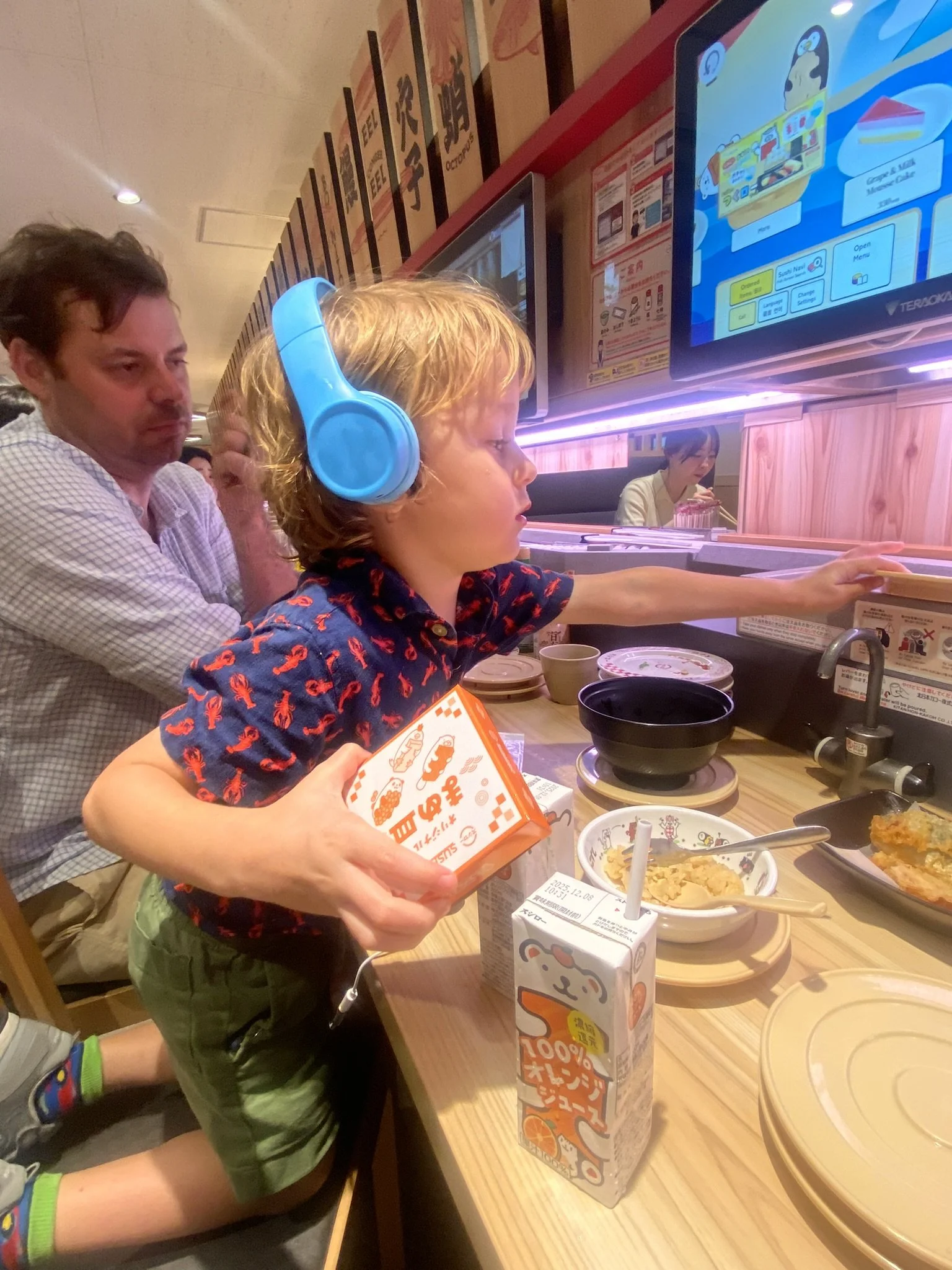
Conveyor-belt sushi funConveyor-belt sushi became another repeat favorite. We tried it on our first trip and came back to it again with our son in 2025, when it became as much entertainment as dinner. He loved watching the dishes and our orders make their way to the table, and at one restaurant the touchscreen even included little games where you could win prizes. He walked away with a keychain and a tiny soy sauce bowl that we still use at home - a very small souvenir from a meal he had an absolute blast with.
Food markets were also great places to try local specialties like takoyaki, little ball-shaped snacks filled with octopus, and okonomiyaki, a savory pancake loaded with different ingredients and toppings. We sampled plenty of other things simply out of curiosity too. At Tsukiji, that once meant eating what we can only describe as something resembling a fish hot pocket with a beer at about 10 in the morning. When in Japan.
Three trips later, we still haven’t come close to feeling finished with Japan. Each visit has given us a different version of the country - first discovering it as newlyweds, then using Osaka as a base to explore farther, and eventually returning with our son and seeing familiar places through a completely different lens. There are still cities we haven’t seen, experiences we haven’t tried and plenty of reasons to go back. At this point, Japan doesn’t feel like somewhere we’ve checked off the list. It feels like somewhere we’ll keep returning to.
Worth KnowingDon’t Overdo the Temples - Kyoto has so many temples and shrines that it’s easy to overpack your day. We found that two or three major stops were plenty, especially once you factor in the walking and travel time between them.
Harajuku is Better as an Add-On - We enjoyed walking through Harajuku, grabbing a crepe and taking in the crowds, but we wouldn’t make it a major focus of a Tokyo itinerary. It pairs well with nearby Meiji Jingu if you’re already in the area.
Tsukiji Isn’t a Must - We enjoyed wandering the stalls and trying a few things, but personally wouldn’t consider it essential if your Tokyo schedule is already packed. Go if seafood markets are especially interesting to you.
Experience Shibuya Crossing Both Ways - It’s worth walking through the crossing at least once just to be part of the rush - take a quick video while you’re in it. For a view from above, the Starbucks on the second floor of Shibuya Tsutaya overlooks the crossing.
Don’t Be Intimidated by Ordering - Some ramen restaurants use vending machines for ordering, while others have counter seating or individual booths. It may feel unfamiliar at first, but it’s usually easy enough to figure out once you’re there.
Japanese Toilets are an Experience - Even the bathrooms can feel high-tech. Heated seats, automatic lids, bidet controls and sound effects are all common enough that figuring out the buttons becomes part of the fun.

Trip Highlights
Four experiences we’d highly recommend
Shinkansen
The Shinkansen is one of those experiences that just feels uniquely Japan. Even if you’re staying primarily in Tokyo, it’s worth considering a day trip somewhere just for the excuse to ride the famous bullet train. How often can you say you’ve smoothly zoomed across the countryside at nearly 200 mph? You get the experience of riding one of Japan’s most iconic trains and the bonus of exploring somewhere new along the way.
Golden Gai
Tucked into the bright lights and energy of Shinjuku, Golden Gai is a maze of narrow alleyways packed with hundreds of tiny bars, each with its own personality. Many have room for only a handful of people, which is part of the fun - grab a drink, chat with the bartender or fellow travelers, then squeeze into another spot when you’re ready for a change of scenery. It’s quirky, social, and unlike a typical night out back home. For couples or friends looking to experience Tokyo after dark, this is one of our favorite places to start.
Fushimi Inari Taisha
Fushimi Inari is one of those places that just screams Japan. Its seemingly endless rows of bright orange torii gates are instantly recognizable, but there’s something different about actually walking through them yourself. The trails wind through a peaceful, wooded area of Kyoto, and you don’t have to complete the entire climb to get the experience. Even if Kyoto isn’t your home base, it’s easy enough to reach from Tokyo or Osaka - and this is one iconic sight we think is absolutely worth the trip.
Senso-ji
Senso-ji feels like one of those places you just have to see while you’re in Tokyo. It’s the city’s oldest Buddhist temple and gives you so many of those quintessential Japan pictures you’re probably hoping to come home with. But we also loved everything surrounding it - the busy shopping streets, souvenir stalls, snacks, restaurants and local shops all within the same area. You can see an iconic piece of Tokyo, grab something to eat, do some souvenir shopping and spend a few hours just wandering around.
Moments from our trip
OUR VISITS: JUNE 2018 • DECEMBER 2019 • AUGUST 2025
KNOW BEFORE YOU GO

BEST TIME TO VISIT

Spring & Fall: Generally the most comfortable times to visit, with milder temperatures, cherry blossoms in spring and colorful foliage in fall.
Summer: Expect heat and humidity, particularly in July and August, with Japan’s rainy season earlier in the summer.
Winter: Temperatures vary by region, but Tokyo, Osaka and Kyoto can still be comfortable for sightseeing with the right layers.
OUR TAKE: We’ve visited in three different seasons. June was warm with some rain but overall very pleasant, while December was cool enough for jackets but not uncomfortably cold. August was another story - hot and very humid!
CURRENCY

Japanese Yen (JPY). Credit cards are widely accepted at hotels, restaurants and many shops, but it’s still smart to keep some cash on hand. Smaller businesses and more rural locations may be cash-only.
Carry Cash? Yes. We were able to use credit cards surprisingly often, even at many markets, but cash was handy for inexpensive snacks, small purchases and souvenirs. And unlike many destinations, you generally won’t need to set aside cash for tipping.
ENTRY REQUIREMENTS

U.S. citizens traveling for short-term tourism generally do not need a visa.
A valid passport is required.
Entry requirements can change, so always verify current requirements before traveling.
Requirements can change! Refer to the Travel.State.Gov site for more info.
GETTING AROUND

Japan has an excellent public transportation system, making it easy to get around without a car. Subways and trains are the easiest way to travel within major cities, while the Shinkansen connects destinations across the country.
OUR TAKE: We relied heavily on the subway during all three trips and found both Tokyo and Osaka easy to navigate once we got the hang of them. We used taxis occasionally, but rarely needed them. For longer distances, we traveled by Shinkansen and purchased a Japan Rail Pass on our second trip, which worked well for our itinerary.
LANGUAGE

Japanese is the official language. English signage is common in major tourist areas and transportation hubs, but English proficiency varies and travelers may encounter more of a language barrier outside the most heavily visited areas.
OUR TAKE: We found it surprisingly easy to get around without speaking Japanese, especially in Tokyo. We occasionally ran into more of a language barrier outside Tokyo, but Google Translate filled in the gaps when we needed it. Overall, we never found language to be an obstacle to traveling independently.
HEALTH & VACCINES

Stay up to date on routine vaccinations.
Additional vaccines may be recommended depending on your itinerary, trip length and activities.
Japanese encephalitis vaccination is generally not recommended for short-term travel limited to urban areas, but may be recommended or considered for longer stays or certain rural/outdoor travel.
Requirements can change! Refer to the Travel.State.Gov site for more info.
POWER REQUIREMENTS

Type A plugs | 100 V | No adapter needed for most U.S. devices. Japan uses the same two-flat-pin plug found in the U.S. Check that your device supports 100 V before plugging it in.
Travel Notes
Little tips and local finds that made our trip even better
On our first trip to Japan, we’d heard Anthony Bourdain recommend Lawson’s egg sandwich, so of course we had to try it - and we’ve gone back for one on every trip since. Lawson and 7-Eleven are also great for snacks, drinks and quick meals. On our last trip with our son, we regularly stocked up there for the hotel and long sightseeing days. Even if egg sandwiches aren’t your thing, there’s plenty to choose from.
Food TipConvenience Stores Are Worth a Stop
We usually arrive in Japan with enough yen to get us through most of the trip, but when we’ve needed more, 7-Eleven ATMs have been the easiest option. Rather than searching for a currency exchange, we could usually find a 7-Eleven nearby in cities like Tokyo and Osaka and withdraw what we needed. It’s an easy backup to know about if you start running low on cash.
Money TipUse 7-Eleven ATMs for Yen
The Shinkansen is iconic enough that we think it’s worth riding even if you don’t have a big trip planned around it. While based in Osaka, we used it for two trips to Kyoto and one to Hiroshima - and liked it so much that we eventually picked a random town just for an excuse to ride again. That town was Kurashiki, somewhere that hadn’t even been on our radar, and it ended up being a really fun change of pace from the bigger cities.
Transportation TipTake a Random Day Trip
If you’re planning to travel between several cities, it’s worth pricing out the Japan Rail Pass before your trip. We used one on our second visit and loved the flexibility of having our train travel prepaid while we moved between Osaka, Kyoto and Hiroshima. Just do the math first - depending on where you’re going and how often you’ll use it, individual tickets may make more sense.
Booking TipCheck out the Japan Rail Pass
We’d heard so much about Japan’s capsule hotels that we had to try one - on the last night of our honeymoon, no less. Ours was especially convenient because we had an early flight to Bali the next morning, but we didn’t realize until we checked in that men and women sleep on separate sides. So much for a romantic final night! It was quirky, convenient and completely different from anywhere else we’d stayed - definitely worth trying if it fits naturally into your plans.
Hotel TipTry a Capsule Hotel
Japan comes with a lot of temples, shrines and historical sights - and kids may not appreciate all of them quite as much as you do. Try mixing those experiences with something quirky or interactive that everyone can enjoy. We loved teamLab Planets in Tokyo with our son, and places like the Cup Noodles Museum near Osaka are another fun option to break up the more traditional sightseeing.
Parent TipMix it Up for Kids
We hadn’t planned a baseball game into our first Japan trip at all, but a rainy day sent us looking for something fun to do indoors - and the Tokyo Giants happened to be playing at the Tokyo Dome. We bought standing-room tickets that morning and ended up with one of our most memorable experiences. It’s still baseball, but with a distinctly Japanese feel, from the energy in the stands to the cheerleaders and concession food.
Local TipCatch a Baseball Game
On one of our last nights in Tokyo, we decided we couldn’t leave Japan without trying karaoke. We stopped at one of the first places we saw and booked a room for just 30 minutes - an hour and a half later, we were still there. It was just the two of us, and I honestly don’t remember laughing so hard in my life. Karaoke spots are easy to find around Tokyo, and it’s one of those very Japan experiences that’s worth trying at least once.
Experience TipTry Karaoke
Last updated: September 2026