
Can We Actually Get Our Child to Sleep on the Plane?
If someone has figured out a foolproof way to make every child fall asleep on command on an airplane, we'd love to hear it.
Until then, we've learned that getting our son to sleep on a flight is less about making him sleep and more about creating the right conditions for it to happen.
And, as with pretty much everything involving kids, what works for one child may do absolutely nothing for another. No one knows your child better than you do. This is simply what has worked well for our son and our family over the years.
Babies Are a Little Different
Most of what we're talking about here applies to toddlers and preschoolers.
When our son was a baby, we didn't really try to convince him to sleep on airplanes. Babies have their own schedules, and if he was tired, we mostly focused on making him comfortable and letting sleep happen when it happened.
Long-haul flights were a little different. Once dinner was over, the cabin lights went down and everyone settled in for the night, we'd settle him in too. Fortunately, he was usually pretty amenable to the idea.
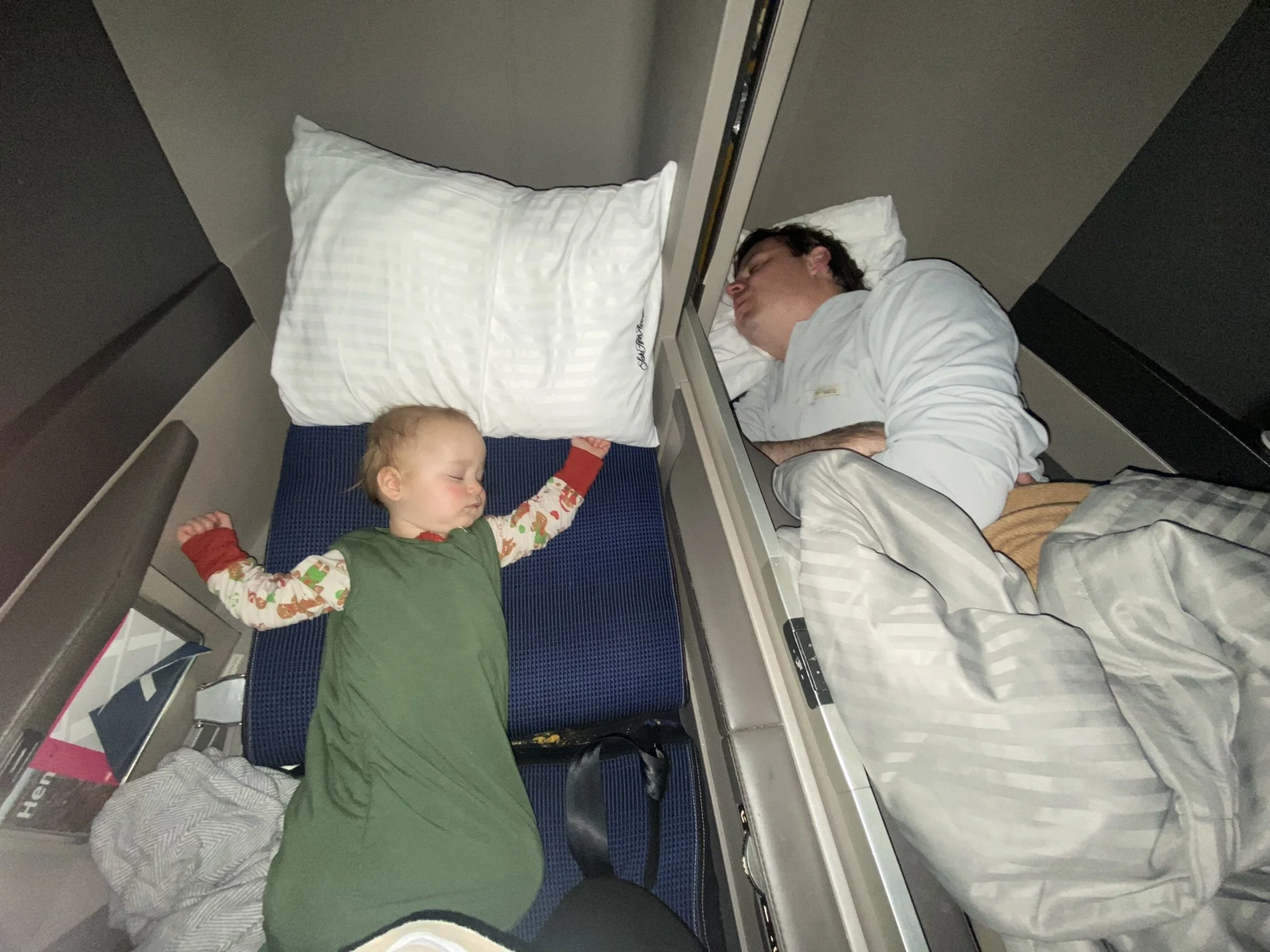
On one particularly memorable flight to Belgium, we were upgraded to Polaris with lie-flat seats. Since he was still a lap child, there were only two seats for the three of us.
Two members of our family slept extremely well.
I'll let you guess who wasn't one of them.
But honestly? I'd take an uncomfortable night for myself over an overtired, miserable child on an overnight flight any day. He slept beautifully. I survived. We'll call that a win.
First, Decide Whether They Actually Need to Sleep
We don't automatically try to get our son to sleep every time we get on an airplane.
If we're taking relatively short flights during the day, we'd usually rather keep him awake and entertained. Between the excitement of traveling, walking through airports and skipping a nap, he's generally plenty tired by the time we reach our destination anyway. Sometimes keeping him awake on the plane actually makes bedtime easier.
A long-haul or overnight flight is another story.
If we know there's going to be a real stretch of time when everyone needs to sleep, we start setting that expectation before we even board. We'll talk about the fact that we're going to eat, get comfortable and then everyone is going to sleep on the plane. We'll usually have him in his pajamas too, which helps make the whole thing feel a little more like bedtime.
Make It Feel Like Bedtime - Or At Least Airplane Bedtime
Once meal service is finished and things start quieting down, we make his seat into his own little nook.
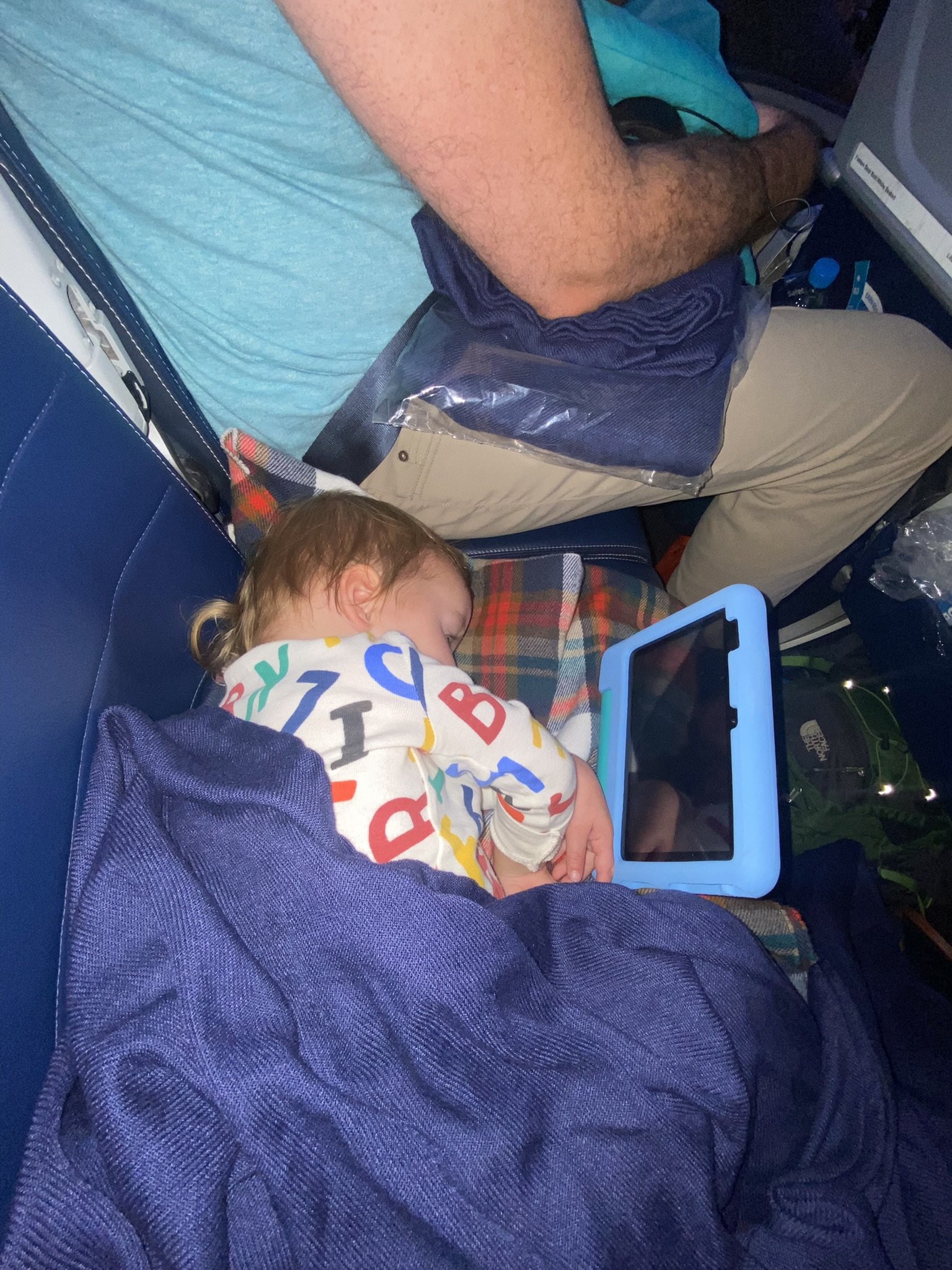
We generally put him by the window, pull out one of our travel blankets and get him as comfortable as we can. We even bring an eye mask, which somehow makes sleeping on an airplane feel much more exciting when you're little.
And yes - we'll let him watch his tablet while he's getting sleepy.
We turn the brightness all the way down so there isn't a bright screen glaring in his face, get him cozy and let him watch something while those eyelids start getting heavier and heavier.
Is this textbook bedtime advice? Probably not. Are we trying to recreate a textbook bedtime routine at 35,000 feet? Also no.
If he's warm, comfortable and peacefully watching something while he starts drifting off, we're perfectly happy to let nature take its course.
Give Them a Little More Room - When You Can
One thing that has worked surprisingly well for us on long-haul flights is an inflatable travel footrest.
We place it in front of his seat so he can stretch his legs out instead of having them dangling toward the floor. It essentially extends his seat and gives him a much cozier little space for sleeping.
There's a selfish benefit here too: when he can stretch forward instead of sideways, I get some of my seat back.
We always follow the flight crew's instructions about when he needs to be buckled in. When we're able to give him a little more room, though, we're perfectly happy to sacrifice some of our own space if it helps him get comfortable. I've learned that losing a few inches of my seat is usually preferable to spending the next several hours next to an overtired preschooler.
Inflatable footrests aren't allowed everywhere, though. Airline policies vary, and there may be restrictions on where and when they can be used onboard. Check your airline's current policy before packing one - and if you can't find a clear answer online, call and ask.
We also only bother bringing ours when we think we'll actually use it. It doesn't take up a tremendous amount of room, but it's still one more thing to pack, inflate, deflate and carry around. For a long-haul flight where sleep really matters? We've found it worth it. For a few hours during the day? We'd leave it at home.
What About Melatonin?
This is one of those decisions that's very personal and something to discuss with your child's doctor.
For major time changes - trips like Taiwan and Japan - we've occasionally used melatonin after talking with our doctors and feeling comfortable with that decision for our son. It's not something we automatically give him because we're getting on a long flight, and we'd always prefer for him to fall asleep on his own if he can.
We're sharing it because it's part of what we've actually done - not because we're recommending it for someone else's child.
The American Academy of Pediatrics recommends talking with your pediatrician before giving melatonin to a child, including discussing whether it's appropriate and the right dosage and timing.
And If They Just Won't Sleep?
Don't make yourself miserable trying to force it.
We've certainly had flights where we thought, surely he's going to fall asleep now...and he had absolutely no interest in cooperating.
We'll still encourage him to settle down. We'll make him comfortable, offer a snack if he's hungry, let him stretch out as much as we're able to and, yes, let him watch his tablet.
Because we've found that the harder we push sleep, the crankier everyone gets.
On a long enough travel day, tired usually catches up with him eventually. And we'd much rather have him peacefully watching something until he nods off than spend an hour turning sleep into a battle.
The Goal Isn't a Perfect Night's Sleep
Sleeping on an airplane is weird - for adults too.
Our goal isn't to recreate his perfect bedtime routine or make sure he gets exactly the same amount of sleep he'd get at home. We're really just trying to give him the best chance of getting some rest so we all arrive in reasonably good shape.
Pajamas help. Making his seat cozy helps. Setting expectations ahead of time helps. Sometimes the footrest helps. Sometimes the tablet helps.
And sometimes, despite everything we've done, he just isn't going to sleep when we'd like him to.
We've learned that's okay too.
Set the Stage, Then Let It HappenYou can't force a child to sleep on an airplane - but you can make it a whole lot easier for them to get there.
Set expectations ahead of time, make their space as comfortable as you can and use whatever parts of your normal routine translate well to 35,000 feet.
And if sleep isn't happening? We've learned not to turn it into a battle. Keep them comfortable, keep things calm and give it time.
Sometimes the best sleep strategy is simply getting out of the way and letting tired win.

Last updated: September 2026