
How Do We Handle Meals & Snacks With Kids on a Flight?
Flying can throw plenty of normal routines out the window - and meals are definitely one of them.
Our son is usually much more interested in snacking his way through a flight than sitting down and eating an actual meal. Maybe it's because his tray table is already occupied with activities. Maybe it's easier to snack with one hand while doing something else with the other. Or maybe it's simply because getting a young child to focus on dinner can be enough of a production at home - so expecting his full attention for an unfamiliar meal at 35,000 feet may be asking a little much!
Whatever the reason, we've learned not to put too much stock in how much he'll eat from an actual airplane meal.
Start with something familiar if you can
If we're flying around a normal mealtime, or he's simply getting hungry before we board, we'll usually try to pick up something at the airport that we already know he likes.
Chicken nuggets, French fries and grilled cheese sandwiches are all safe bets for us. When we can, we'll actually bring the food onto the plane rather than having him eat it in the terminal. That way, we know we have something familiar that he'll likely eat once we're onboard - and eating it gives him something to do for a little while too.
That's especially helpful on a longer flight when we know a meal will eventually be served but have absolutely no idea whether he'll actually eat it.
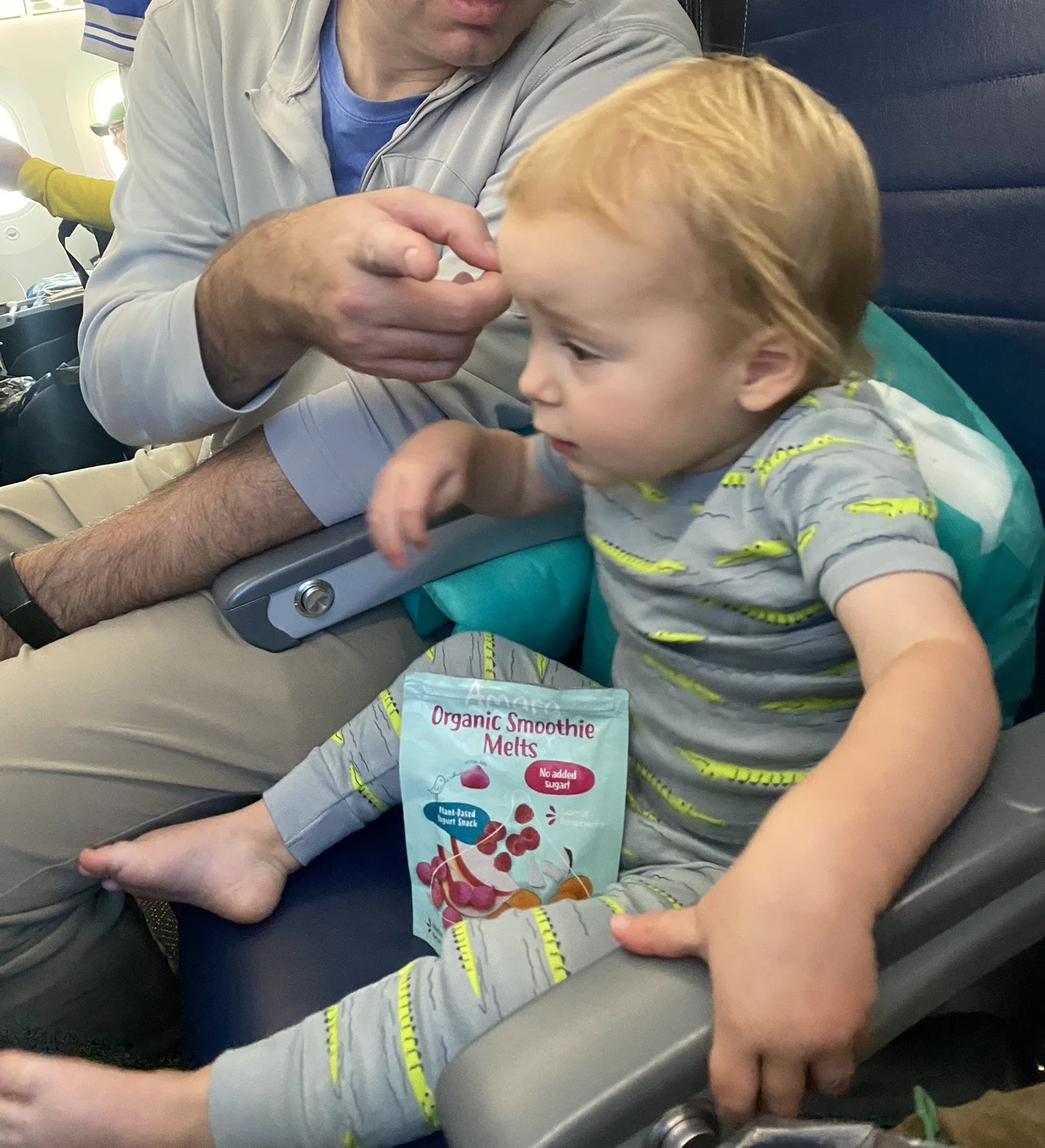
Pack snacks - and then pack a few more
For shorter flights, we bring a decent variety of snacks. For longer flights, we really don't change the strategy much - we just bring more.
Packs of crackers, granola bars and cucumber slices are common in our bags. We try to stay away from things that crumble too easily; chips, for example, usually don't make the cut. Anything that creates a seat full of crumbs five minutes into a long flight isn't particularly appealing.
And don't forget about yourself! We factor in snacks for both of us too. It's very easy to pack everything your child could possibly need and then realize several hours later that you're hungry.
When our son was a baby, food pouches were especially convenient. Whatever his age, though, we stick with foods he's already had before. An airplane isn't where we personally want to find out that a new food causes an unexpected reaction.
Our general rule with snacks is simple: bring more than you think you'll need!
Don't count on the airplane meal
When a full meal is served onboard, our son will usually pick and choose what he wants from it rather than eat the entire thing.
That's been true whether we're flying economy on a long-haul flight or we've been lucky enough to get upgraded and he has a first-class meal in front of him. We've even requested children's meals on longer flights, and those haven't necessarily been a big hit either.
So while we'll certainly order or request a meal for him when one is available, we don't treat it as our only plan for feeding him.
And if he eats the dinner roll and ignores everything else? Well, at least he ate the dinner roll.
Save what you can use later
One thing we've gotten better about is looking at what's left on his tray before letting the flight attendant haul the whole thing away.
Maybe he didn't want the roll with butter when dinner was served, but he might want it two hours later. Same with packaged items, fruit or a juice box.
A few small Ziploc bags tucked into your backpack can come in surprisingly handy here. Obviously, use some common sense about what can safely sit around and what can't, but don't automatically give up something that could make a useful snack later.
My husband and I have also been known to pick at whatever he's leaving behind before it disappears. No sense letting perfectly good food go to waste if we're hungry too!
And remember: on a long flight, a snack isn't only food. Sometimes it's also another few minutes of something to do.
If he's sleeping, sleep wins
Meal service doesn't always line up particularly well with a child's schedule.
If our son is asleep when his meal arrives, we may hold onto it for a while in case he wakes up. But we certainly aren't waking him just because dinner has been served.
If he's still sleeping when the flight attendants need to collect the trays, we'll save whatever makes sense for later and let the rest go.
A sleeping child on an airplane is far more valuable to us than making sure he eats his airline dinner on schedule.
Don't forget about drinks
Each of us brings a reusable water bottle when we fly, and we fill them at a water station in the airport after going through security. That way, we always have water available rather than having to wait for beverage service.
If our son wants something different onboard, we'll sometimes get him milk or juice - but we've learned to ask the flight attendant to only fill his cup about a quarter to halfway.
Otherwise, it's very easy for a little kid to happily drink the entire cup simply because it's sitting in front of him...and then we're making a trip to the bathroom shortly afterward.
Obviously bathroom trips are part of life on a long flight. But on a shorter one? If we can avoid creating an unnecessary visit to the airplane lavatory, we'll take it.

Don't Rely on the Airplane MealWe try to bring something familiar onboard when we can, pack more snacks than we think we'll need and never count on the airline meal being the meal our son actually eats.
If he only wants part of what's served, we'll save what makes sense for later. If he's asleep, sleep wins. And we always keep water handy rather than relying solely on beverage service.
Some flights he eats more than others, and that's okay. The goal isn't a perfect meal at 35,000 feet - it's having enough familiar options to keep him fed and comfortable along the way.
Last updated: September 2026